






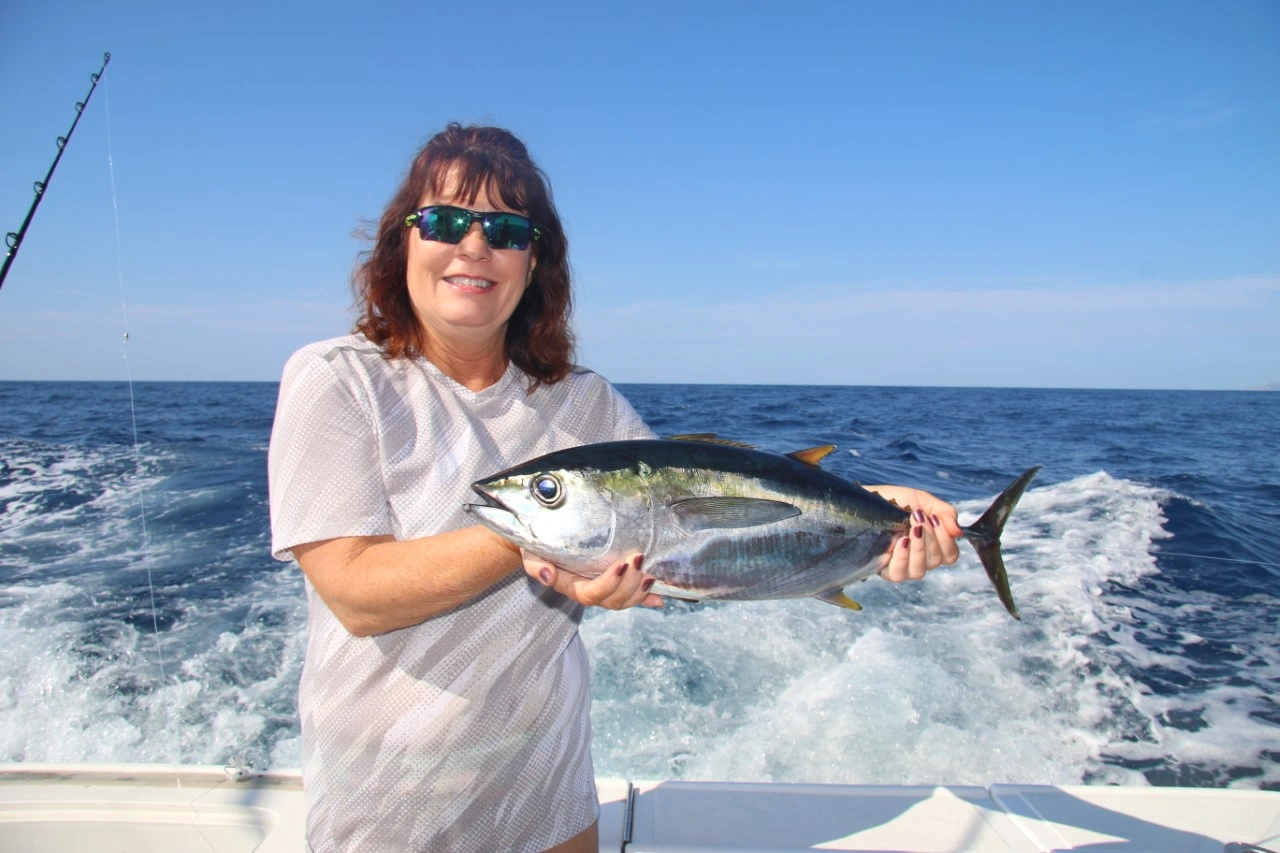
Every year anglers planning a trip to Baja California Sur begin researching marlin, dorado, wahoo, and roosterfish, yet many eventually discover that yellowfin tuna are the species that captures their imagination more than any other. The idea of watching a rod double over, hearing line disappear from a reel at incredible speed, and spending the next hour locked in a battle against one of the ocean’s most powerful fish has a way of becoming addictive long before a fisherman ever steps aboard a boat. That anticipation is exactly why so many visitors ask When is Tuna Season in Cabo? because understanding the seasonal movements of yellowfin tuna can dramatically improve the odds of experiencing the type of offshore fishing adventure that people talk about for years after returning home.
Unlike many destinations around the world where tuna seasons are relatively short and predictable, Cabo San Lucas operates according to a more complex rhythm. Water temperatures change throughout the year. Bait migrations shift from month to month. Ocean currents move enormous amounts of life through the Pacific side and the Sea of Cortez. One season may begin slightly earlier than expected while another may continue well into late fall. The result is a fishery that rewards anglers who understand the relationship between the environment and the species they are pursuing.
The first thing that surprises many visitors is how quickly they reach productive water after leaving the marina. Cabo is blessed with a dramatic underwater landscape where deep ocean habitat begins remarkably close to shore. Instead of spending hours traveling toward offshore banks, fishermen often find themselves searching for tuna in blue water within a relatively short period of time. That proximity to deep water is one of the reasons Cabo has become one of the most respected sportfishing destinations in the world. Yellowfin tuna, striped marlin, blue marlin, dorado, sailfish, and wahoo all move through the same ecosystem, creating a level of fishing diversity that few places can match.
For experienced captains, answering When is Tuna Season in Cabo? begins with understanding the ocean itself rather than looking at a calendar. Tuna do not arrive because a certain date appears on a page. They arrive because food becomes abundant, water temperatures become favorable, and offshore conditions create opportunities for feeding. When all of those elements align, Cabo transforms into one of the finest yellowfin tuna fisheries on the planet.
How Ocean Conditions Shape When Tuna Season in Cabo Arrives
One of the biggest misconceptions among first-time visitors is that tuna simply appear during a specific month and then disappear once that month ends. In reality, yellowfin tuna are highly migratory predators that spend their lives following favorable conditions. They move toward food sources, track water temperatures that suit their biology, and concentrate wherever feeding opportunities are greatest.
During the winter months, offshore temperatures commonly range from the upper sixties into the low seventies. Tuna remain present, but their distribution tends to be less predictable than during the warmer portions of the year. At the same time, striped marlin often dominate the conversation because cooler water temperatures create excellent billfishing opportunities throughout the region.
As spring arrives, gradual warming begins influencing the entire ecosystem. Sardines become increasingly active. Bait schools expand. Offshore productivity starts building momentum. These changes may not be obvious to a visitor standing on shore, but captains who spend hundreds of days each year on the water recognize them immediately because they signal the beginning of a seasonal transition.
By late spring and early summer, water temperatures often move into ranges that yellowfin tuna prefer. Flying fish become increasingly common. Porpoise schools start appearing more frequently. Frigate birds spend their days searching for feeding activity. Every sign suggests the fishery is preparing for the strongest months of the year.
Understanding these environmental shifts is essential when determining When is Tuna Season in Cabo? because the most productive periods consistently coincide with warm water and abundant forage.
Why Summer Begins Building Momentum for Yellowfin Tuna
July is often viewed as the unofficial start of serious tuna fishing by many experienced anglers. While yellowfin can certainly be caught before midsummer, July frequently marks the point where consistency begins improving across a wide range of offshore areas.
The ocean itself takes on a different character during summer. Water temperatures climb into the upper seventies and low eighties. Flying fish scatter across the surface. Large schools of bait become easier to locate. Offshore currents transport nutrients and forage through productive fishing grounds. Every element of the ecosystem seems to be moving toward peak productivity.
What makes summer especially exciting is the sense of anticipation it creates. Captains know that the strongest months are approaching, and every week seems to bring additional signs that tuna activity is increasing. Reports of larger fish begin appearing. Schools become more concentrated. Areas that were relatively quiet during spring suddenly become alive with feeding activity.
A fisherman leaving Cabo Harbor during July may encounter striped marlin crashing bait schools, dorado feeding beneath floating debris, and yellowfin tuna working beneath porpoise all within the same day. That diversity is one of the reasons Cabo enjoys such an extraordinary reputation among offshore anglers.
The beauty of midsummer fishing is that every trip feels filled with possibility. The next bird school, the next current edge, or the next patch of blue water may hold the fish that transforms an ordinary outing into an unforgettable one.
Why August Strengthens the Answer to When is Tuna Season in Cabo?
By August, many captains feel that the fishery has entered a completely different phase. Water temperatures have typically stabilized within favorable ranges, bait concentrations become more substantial, and yellowfin tuna begin appearing with greater consistency throughout offshore waters.
One reason August performs so well is the sheer abundance of food available to predators. Sardines, mackerel, squid, flying fish, and skipjack tuna all contribute to a thriving food chain. When prey becomes plentiful, yellowfin respond aggressively.
Successful crews spend their days searching for the signs that reveal where feeding activity is taking place. Rather than randomly trolling open water, they focus on indicators that consistently produce results:
- Porpoise schools traveling through productive water.
- Frigate birds circling feeding zones.
- Flying fish concentrations.
- Temperature breaks.
- Current edges.
- Offshore banks holding bait.
When multiple indicators appear together, the probability of encountering actively feeding tuna increases dramatically.
August is also the period when many anglers begin hearing stories about fish exceeding one hundred pounds. While smaller tuna remain common, larger specimens become increasingly realistic targets. Every strike carries uncertainty because the fish at the other end of the line may be a twenty-pound football tuna or something significantly larger.
For anglers asking When is Tuna Season in Cabo?, August often marks the beginning of the answer they are hoping to hear.
Offshore Banks That Become Critical During Tuna Season
The offshore banks surrounding Cabo San Lucas have achieved legendary status among serious fishermen because of their ability to attract both bait and predators. These underwater structures influence current flow, create feeding opportunities, and often become focal points during productive seasons.
The Gordo Banks are perhaps the most famous example. Located offshore from San Jose del Cabo, these underwater high spots frequently attract yellowfin tuna whenever conditions align correctly. Warm water moving across the structure combines with bait concentrations to create an environment capable of supporting exceptional fishing.
The 1150 Bank serves a similar purpose farther offshore. Many experienced captains monitor this area carefully during peak months because it often becomes productive when larger fish move through the region.
What separates successful anglers from casual observers is understanding that the banks themselves are not magical. Their productivity depends entirely on current conditions. Water temperature, bait availability, moon phase activity, and seasonal migrations all influence whether a particular area will produce fish on any given day.
When those factors align, however, these offshore structures can generate some of the finest tuna fishing found anywhere in the eastern Pacific.
Why Porpoise Schools Matter So Much to Tuna Fishermen
Few sights excite offshore anglers more than spotting a large school of porpoise moving across calm blue water. For generations, fishermen throughout the Pacific have recognized the relationship between porpoise and yellowfin tuna. While scientists continue studying the exact reasons behind the association, its practical importance remains undeniable.
Large schools of tuna frequently travel beneath porpoise. As a result, locating productive porpoise schools often becomes one of the most important tasks during peak tuna season.
The scene itself can be remarkable. Hundreds of porpoise moving together. Frigate birds circling overhead. Flying fish exploding from the surface. Somewhere beneath all of that activity, yellowfin tuna feeding aggressively.
Not every porpoise school contains tuna, but many do. Experienced captains become exceptionally skilled at identifying which schools deserve closer attention and which are less likely to produce results.
During the strongest months of the season, finding the right porpoise school can completely transform a fishing trip and provide anglers with opportunities they will remember for the rest of their lives.
Why September Is Often Considered the Heart of Tuna Season in Cabo
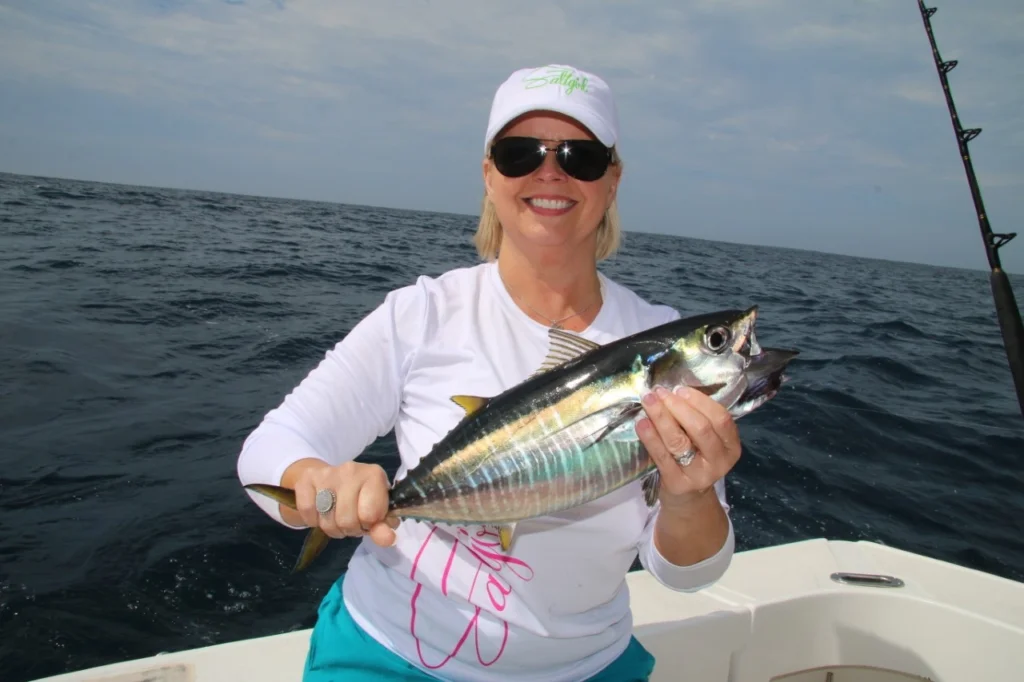
If there is one month that repeatedly enters the conversation whenever veteran captains debate the strongest yellowfin tuna fishing of the year, it is September. While every season develops differently and local conditions always influence the bite, September consistently combines the ingredients that create exceptional offshore fishing. Warm water dominates the region, bait concentrations reach impressive levels, porpoise schools become increasingly common, and larger tuna begin appearing with greater regularity than they do during much of the year.
For many fishermen, September represents the point where the possibility of catching a truly memorable fish becomes very real. The smaller football tuna that provide excellent action remain present, yet anglers know that every strike could come from a fish weighing well over one hundred pounds. That uncertainty is part of what makes tuna fishing so addictive. Unlike many species where size can often be estimated relatively quickly, yellowfin tuna frequently reveal their true power only after the fight begins.
One of the reasons September performs so consistently is the maturity of the offshore ecosystem. By this stage of the season, baitfish populations have had months to develop. Flying fish become common across large areas of water. Sardines gather in significant concentrations. Squid activity contributes additional forage. Everywhere predators look, food is available. The result is an environment capable of supporting substantial numbers of tuna.
This period also produces some of the most visually exciting fishing of the year. Anglers may witness massive schools of porpoise stretching across the horizon while frigate birds circle above them and yellowfin tuna feed beneath the surface. It is the type of offshore scene that people imagine when they dream about fishing in Cabo, and it is a major reason why so many experienced anglers answer When is Tuna Season in Cabo? by immediately mentioning September.
How October Extends Peak Tuna Season in Cabo
Many visitors assume that once summer begins fading, tuna fishing follows the same pattern. In reality, October often remains one of the strongest months of the entire season and, in some years, may even outperform September. Water temperatures typically remain favorable, bait concentrations continue supporting the offshore ecosystem, and larger yellowfin remain active throughout productive fishing grounds.
One advantage October offers is a slight moderation in weather conditions. The intense heat associated with late summer often begins easing while offshore productivity remains extremely strong. For anglers spending full days chasing tuna, that additional comfort can make long hours on the water significantly more enjoyable.
Captains frequently report seeing exceptional signs of life during October. Large schools of porpoise continue moving through offshore zones. Bird activity remains strong. Flying fish scatter across warm blue water. Temperature breaks and current edges continue concentrating bait and predators in predictable areas.
What makes October especially attractive is the balance it offers. Anglers still have legitimate opportunities to encounter trophy-class tuna while often enjoying slightly more stable conditions than they experienced during the hottest portions of summer. Many repeat visitors intentionally schedule annual trips during October because they believe it provides one of the most complete fishing experiences available in Cabo.
The Difference Between School Tuna and Trophy Yellowfin
One of the reasons yellowfin tuna generate so much excitement is the incredible range of sizes available throughout the season. A fisherman hooking a tuna offshore may initially have no idea whether the fish weighs twenty pounds or two hundred pounds. Both possibilities exist.
School-sized tuna, often called football tuna, generally range between fifteen and thirty pounds. These fish fight hard, provide excellent eating quality, and frequently travel in large schools capable of producing multiple hookups. For many anglers, catching several football tuna during a day offshore creates exactly the type of experience they hoped for.
Trophy yellowfin represent a completely different challenge. Fish exceeding one hundred pounds possess extraordinary strength and stamina. They are capable of making blistering runs, diving deep beneath the boat, and forcing anglers into prolonged battles that demand both patience and endurance. Some of the largest yellowfin landed around Cabo require hours of effort before finally reaching the boat.
The possibility of connecting with one of these fish is a major reason why people spend so much time researching When is Tuna Season in Cabo? because understanding the strongest months dramatically improves the odds of encountering larger specimens.
Why Kite Fishing Has Become Popular During Peak Tuna Months
As yellowfin tuna grow larger, many crews begin utilizing specialized techniques designed specifically for trophy fish. One of the most effective methods involves kite fishing.
The concept is simple in theory but remarkably effective in practice. A kite suspends bait on or near the surface while keeping fishing line largely out of the water. This presentation allows the bait to behave naturally, making it highly attractive to large tuna feeding upward beneath schools of baitfish.
In Cabo, kite fishing is often combined with flying fish presentations because yellowfin are exceptionally responsive to them. During peak months, large tuna frequently target flying fish, and presenting one naturally near the surface can produce explosive strikes.
Some crews take the technique even further by using helium-assisted kites that allow precise bait placement in varying wind conditions. These specialized methods are often employed when anglers are specifically pursuing trophy-class fish rather than simply seeking action.
How Moon Phases Influence Yellowfin Feeding Activity
Experienced fishermen rarely discuss seasonal fishing patterns without mentioning the moon. While opinions vary regarding the exact degree of influence, there is broad agreement that moon phases affect tides, current flow, bait movement, and predator behavior throughout the marine ecosystem.
Periods surrounding new moons and full moons frequently create stronger tidal movement. Increased water movement can stimulate feeding activity by concentrating bait and creating favorable conditions for predators.
Many anglers planning extended fishing vacations intentionally review lunar calendars before finalizing travel dates. They understand that combining favorable moon phases with productive seasonal conditions may provide an additional advantage.
Moon phases should never be viewed as guarantees. However, when warm water, abundant bait, active porpoise schools, and favorable lunar conditions align, offshore fishing can become exceptional.
Why Cabo San Lucas Fishing Has Become Valuable for Tuna Anglers
Planning a successful fishing trip involves much more than choosing travel dates. Anglers often spend considerable time researching seasonal patterns, species availability, and historical fishing trends before making reservations. One resource many fishermen use during that process is Cabo San Lucas Fishing.
The site provides information regarding seasonal fishing opportunities, species movements, offshore conditions, and planning considerations throughout the year. Visitors researching yellowfin tuna frequently use Cabo San Lucas Fishing to compare different months and better understand how seasonal factors influence the fishery.
Because the strongest tuna fishing is driven by environmental conditions rather than fixed dates, having access to seasonal information helps anglers align their trips with periods historically known for productive offshore action. Whether someone is pursuing football tuna, trophy yellowfin, or a mixed-species offshore adventure, understanding the seasonal progression of the fishery can significantly improve planning.
Why Cabo Continues to Rank Among the World’s Top Tuna Destinations
Very few locations offer the combination of accessibility, diversity, and consistency found in Cabo San Lucas. Deep water exists close to shore. Multiple pelagic species share the same ecosystem. Offshore banks provide structure capable of attracting bait and predators. Warm-water currents support healthy tuna populations during the strongest months of the year.
What truly separates Cabo from many competing destinations is the variety available on any given trip. An angler searching for yellowfin tuna may encounter marlin, dorado, sailfish, and wahoo during the same outing. That diversity creates excitement because every day offshore feels unpredictable.
When examining the entire annual cycle, the answer to When is Tuna Season in Cabo? becomes much clearer. Tuna can be caught throughout much of the year, but the strongest period generally develops between August and November, with September and October frequently producing the most consistent opportunities for both numbers and size. Warm water, abundant bait, productive offshore currents, active porpoise schools, and thriving marine ecosystems combine during these months to create the conditions that have made Cabo San Lucas one of the most respected yellowfin tuna destinations in the world.
For anglers dreaming about screaming drags, powerful fish, and unforgettable offshore experiences, understanding When is Tuna Season in Cabo? is often the first step toward planning the fishing adventure of a lifetime.