






When people book their first fishing charter in Cabo San Lucas, they usually spend most of their time thinking about the fish. They imagine marlin crashing a teaser, tuna peeling line from a screaming reel, or a brightly colored dorado leaping across the surface in the Baja sunshine. Then, somewhere between booking the trip and arriving at the marina, another question inevitably appears. It is a simple question, but one that reveals a lot about how different Cabo is compared to many other fishing destinations around the world: How Far Offshore Do You Fish in Cabo?
The answer surprises almost everyone.
In many famous offshore fisheries, anglers may spend two or three hours running before they ever begin fishing. Some destinations require lengthy journeys to reach deep water or productive offshore banks. Cabo is different because deep water arrives remarkably close to shore. In fact, one of the reasons the destination has become famous among anglers is because boats can often begin targeting world-class species far sooner than visitors expect.
The unique geography of Baja California Sur plays a major role in this advantage. The southern tip of the peninsula sits at the meeting point of the Pacific Ocean and the Sea of Cortez, creating an environment filled with currents, baitfish, temperature breaks, and pelagic predators. Marlin, tuna, dorado, sailfish, and wahoo regularly move through these waters, often utilizing areas that are surprisingly accessible from the marina.
This means that the answer to How Far Offshore Do You Fish in Cabo? changes from day to day, but it is almost always less intimidating than first-time anglers imagine.
Some visitors are actually disappointed when they learn how quickly the fishing begins because they expected a dramatic offshore adventure involving endless hours of travel. Then they hook their first marlin and instantly forget they ever cared about the distance.
The reality is that Cabo’s greatest strength may not simply be the number of fish available. It may be how efficiently anglers can reach them.
Why How Far Offshore You Fish in Cabo Depends on What You Want to Catch
One of the biggest misconceptions among first-time anglers is the belief that every fish lives in the same place.
Nothing could be further from the truth.
Different species behave differently. They feed differently. They follow different environmental conditions. Most importantly, they occupy different areas of the ocean.
Striped marlin often utilize productive blue-water zones relatively close to Cabo. Yellowfin tuna may follow porpoise schools or bait concentrations much farther offshore. Dorado frequently gather beneath floating debris, current lines, and bait-rich water. Wahoo move through productive offshore areas searching for opportunities to ambush prey.
As a result, How Far Offshore Do You Fish in Cabo? often depends less on mileage and more on species selection.
If a charter is focused on striped marlin, the captain may begin fishing much sooner than expected. If giant yellowfin tuna become the primary goal, additional exploration may be required. The distance changes because the fish change.
Experienced captains understand this dynamic extremely well.
Rather than deciding where to fish before leaving the dock, they evaluate current conditions, recent reports, bait activity, water temperatures, and environmental factors before making decisions.
This flexibility is one reason Cabo remains so productive throughout the year.
How Deep Water Close to Shore Changes Offshore Fishing in Cabo
One of the most remarkable aspects of Cabo’s fishery is the proximity of deep water.
Many anglers assume that “deep sea fishing” automatically means traveling enormous distances offshore. While that may be true in certain destinations, Cabo benefits from underwater terrain that allows deep water to approach the coastline rapidly.
The practical advantages are enormous.
Instead of spending a significant portion of the day traveling, anglers spend more time actively fishing. Captains can adjust their plans more efficiently. Families remain engaged because the action begins sooner. Even shorter charters can access productive offshore environments.
Visitors are often amazed by how quickly they transition from sightseeing along the coastline to trolling for marlin in water capable of supporting some of the world’s most sought-after gamefish.
This accessibility helps explain why How Far Offshore Do You Fish in Cabo? remains one of the most frequently asked questions among first-time visitors.
The answer frequently exceeds expectations in the best possible way.
Why Striped Marlin Influence How Far Offshore You Fish in Cabo
No species has contributed more to Cabo’s reputation than the striped marlin.
These fish are responsible for countless photographs, unforgettable stories, and repeat visitors who return year after year hoping to experience the excitement again.
Fortunately, striped marlin often inhabit areas that are highly accessible from Cabo. While exact locations change according to bait availability and water conditions, anglers regularly encounter opportunities without needing extreme offshore runs.
This accessibility is one of the reasons Cabo became famous in the first place.
Visitors can realistically pursue marlin during standard charter lengths without requiring specialized expeditions. The ability to combine convenience with world-class fishing is something very few destinations can match.
When people ask How Far Offshore Do You Fish in Cabo?, they are often secretly asking whether marlin are difficult to reach.
The answer is encouraging.
Marlin frequently come much closer to Cabo than many anglers realize.
Why Offshore Fishing Distances Change Throughout the Seasons
Water temperatures influence nearly every aspect of offshore fishing.
As temperatures rise and fall throughout the year, fish distributions change. Bait concentrations move. Current systems shift. Feeding patterns evolve.
These environmental changes affect where captains focus their efforts.
During cooler periods, striped marlin often dominate the conversation. During warmer months, blue marlin, tuna, dorado, and wahoo may become increasingly prominent.
The fishery evolves continuously.
This means the answer to How Far Offshore Do You Fish in Cabo? during January may differ significantly from the answer during September.
Successful captains constantly adapt.
Rather than relying on fixed locations, they follow fish movements and environmental conditions. This willingness to adjust is one reason Cabo’s fleet continues producing exceptional catches throughout the calendar.
How Cabo San Lucas Fishing Helps Anglers Understand Offshore Strategy
Many visitors assume that offshore fishing revolves around simple distance measurements.
Experienced anglers know better.
Successful fishing depends on finding productive water, locating bait, identifying favorable conditions, and understanding fish behavior. Mileage alone rarely tells the entire story.
Cabo San Lucas Fishing helps visitors understand these factors by providing information regarding:
- Seasonal fishing opportunities
- Water temperatures
- Marlin activity
- Tuna migrations
- Offshore conditions
- Fishing reports
- Trip-planning strategies
This information helps anglers understand why productive fishing often occurs closer than expected while still appreciating the dynamic nature of the fishery.
The more visitors learn about Cabo’s offshore environment, the more they appreciate how unique it truly is.
Why Tuna Fishing Sometimes Means Traveling Farther Offshore
If there is one species most likely to influence travel distance, it is yellowfin tuna.
Unlike marlin, which often utilize predictable feeding zones, tuna can be highly mobile. They follow bait concentrations, porpoise schools, current edges, and productive offshore structure.
Some days they appear relatively close to shore.
Other days they require additional searching.
The reward for that effort can be extraordinary.
Large yellowfin tuna provide some of the most memorable fights in all of sportfishing. Their strength, endurance, and willingness to battle make them favorites among experienced anglers.
Many visitors are perfectly happy traveling additional distances when tuna are the target because the potential payoff is so impressive.
The possibility of encountering trophy yellowfin is one reason offshore fishing in Cabo remains endlessly exciting.
Why Offshore Structure Determines How Far Offshore You Fish in Cabo
One of the biggest surprises for anglers who are new to offshore fishing is learning that the ocean is not nearly as empty as it appears from the surface. Beneath the waves lies a complex network of underwater structure that influences everything from bait movement to predator behavior. Offshore banks, underwater ridges, seamounts, drop-offs, current edges, and temperature breaks all play important roles in determining where fish gather.
Experienced captains spend years learning these areas.
They understand that certain locations consistently attract bait while others become productive only during specific conditions. Marlin, tuna, dorado, and wahoo all utilize these offshore feeding zones differently, which means the distance traveled can change dramatically from one trip to the next.
This reality helps explain why How Far Offshore Do You Fish in Cabo? never has a simple mileage-based answer.
Some days, productive water develops close to shore and anglers begin fishing almost immediately. On other days, offshore banks become the center of activity and boats may travel farther while searching for fish. The goal is never to reach a predetermined distance. The goal is to locate the most productive water available.
That philosophy is one reason Cabo remains such a successful fishing destination.
The captains follow fish, not arbitrary numbers on a GPS screen.
Why Weather Influences How Far Offshore You Fish in Cabo
Weather affects every fishery in the world, and Cabo is no exception. Fortunately, the region enjoys excellent fishing conditions during much of the year, which is one reason anglers travel from around the globe to experience its offshore opportunities.
However, conditions still change.
Wind direction, swell height, current movement, water clarity, and atmospheric conditions all influence where fish may be feeding on any particular day. Captains evaluate these factors continuously because they understand how environmental changes affect both bait and predators.
A slight temperature break may attract baitfish.
A favorable current edge may hold marlin.
A concentration of birds may reveal tuna activity.
The ability to interpret these clues allows experienced crews to make intelligent decisions throughout the day. Rather than following the same route repeatedly, they adapt to conditions and adjust their plans accordingly.
This flexibility is another reason How Far Offshore Do You Fish in Cabo? remains such an interesting question.
The answer changes because the ocean changes.
Why Families Love the Answer to How Far Offshore You Fish in Cabo
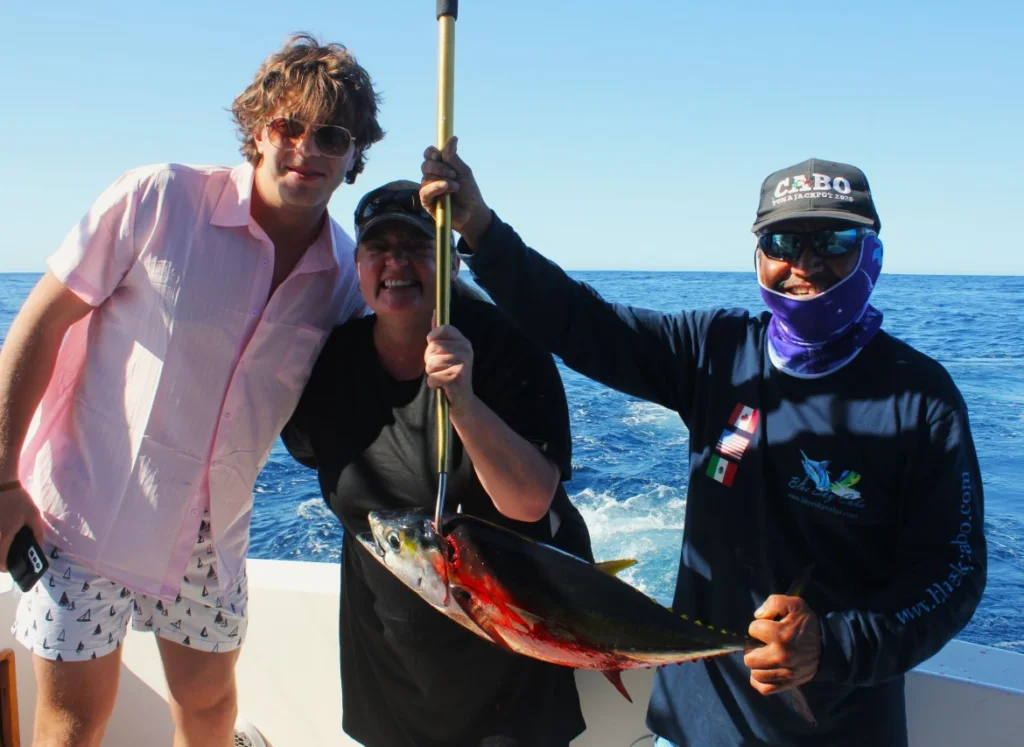
Parents frequently ask about travel distance because they want to know how much time their family will spend fishing compared to simply riding in the boat.
The answer is usually reassuring.
Because deep water exists relatively close to shore, families often enjoy productive fishing opportunities without enduring extremely long offshore journeys. Children remain engaged because the action begins sooner. New anglers feel more comfortable because they spend more time participating and less time waiting.
Many families arrive expecting a long travel day and leave amazed by how quickly the fishing begins.
That immediate engagement creates excitement from the moment the boat leaves the marina.
It also helps explain why Cabo has become one of the most popular family fishing destinations in North America.
The accessibility benefits everyone.
Beginners appreciate it.
Children appreciate it.
Even experienced anglers appreciate maximizing their fishing time.
That is one reason How Far Offshore Do You Fish in Cabo? often becomes one of the most pleasantly surprising aspects of the entire experience.
Why Dorado and Wahoo Rarely Follow a Predictable Schedule
Some species behave as though they enjoy keeping anglers guessing.
Dorado are a perfect example.
One day they may be associated with floating debris relatively close to shore. The next day they may appear farther offshore along a productive current line. Their movements depend heavily on bait availability, water temperatures, and changing environmental conditions.
Wahoo operate similarly.
These high-speed predators can appear almost anywhere that bait concentrations exist. They often surprise anglers because they seem to arrive without warning. A trolling spread designed for marlin may suddenly produce a blistering wahoo strike that changes the entire character of the trip.
This unpredictability adds excitement to every offshore adventure.
Anglers never know exactly what species may appear next.
That uncertainty keeps people returning year after year because every trip feels different from the last.
How Cabo San Lucas Fishing Helps Visitors Understand Offshore Fishing Distances
Many first-time visitors become overly focused on mileage when planning their fishing trip.
Experienced anglers understand that distance is only one piece of a much larger puzzle.
Cabo San Lucas Fishing helps visitors understand the broader factors influencing offshore fishing success by providing information regarding:
- Fishing seasons
- Water temperatures
- Species availability
- Offshore reports
- Current conditions
- Fishing strategies
- Trip-planning recommendations
The site helps anglers recognize that productive fishing depends upon finding fish rather than reaching a specific distance offshore.
Some of the best fishing days occur surprisingly close to Cabo.
Others require more exploration.
The key is understanding that successful fishing revolves around conditions, not mileage.
Why Marlin and Tuna Create Different Offshore Strategies
One of the most fascinating aspects of Cabo fishing is how different species require different approaches.
Marlin frequently benefit from the region’s deep water and productive conditions close to shore. During many periods of the year, captains can begin targeting striped marlin relatively quickly after leaving the marina.
Tuna often require a different strategy.
Because yellowfin follow bait concentrations and feeding activity, captains may search larger areas while looking for signs of life. Bird activity, porpoise schools, temperature breaks, and bait concentrations all become important clues.
This difference helps explain why How Far Offshore Do You Fish in Cabo? can vary depending on the day’s objectives.
The fish ultimately determine the distance.
The captain’s job is to interpret the clues and position the boat where opportunities are greatest.
That challenge is one of the reasons offshore fishing remains so addictive.
Every day presents a new puzzle.
Why Cabo’s Geography Makes It One of the World’s Most Efficient Fisheries
Many fishing destinations offer excellent fish.
Others offer beautiful scenery.
Some provide convenient access.
Few combine all three.
Cabo’s geography creates a rare balance that allows anglers to experience world-class fishing without sacrificing enormous amounts of time to travel. Deep water, productive currents, abundant bait, and multiple gamefish species all contribute to a remarkably efficient fishery.
Visitors spend more time fishing.
Captains remain flexible.
Families stay engaged.
Experienced anglers appreciate the opportunities.
This combination helps explain why Cabo continues appearing on lists of the world’s premier sportfishing destinations.
The Real Answer to How Far Offshore Do You Fish in Cabo?
After considering species behavior, water temperatures, offshore structure, weather patterns, seasonal changes, and fishing objectives, the answer becomes surprisingly simple.
How Far Offshore Do You Fish in Cabo?
As far as necessary and as close as possible.
Some days anglers encounter productive water almost immediately after leaving the marina. Other days captains travel farther while searching for tuna, marlin, dorado, or favorable conditions.
What makes Cabo unique is that productive offshore fishing often occurs much closer to shore than visitors expect.
Deep water begins nearby.
Pelagic species utilize accessible habitat.
Captains can adapt quickly when conditions change.
The result is one of the most efficient and productive offshore fisheries anywhere in the world.
Visitors arrive wondering about distance.
They leave talking about fish.
And in the end, that may be the best answer of all.