







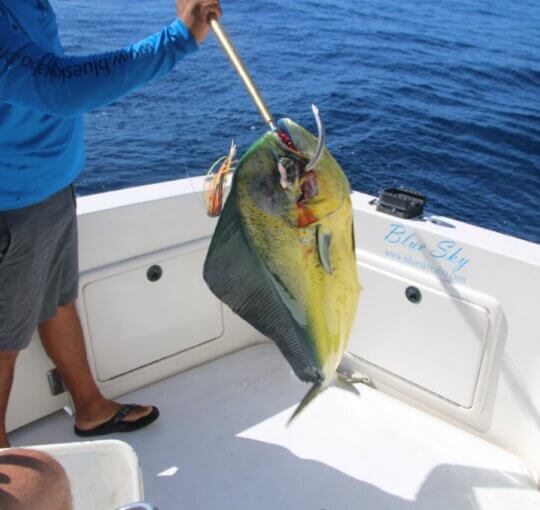
Typical Cabo fishing charters generally range from approximately five to eight hours, although shorter excursions and extended 10-hour fishing charters are also available depending on the boat, targeted species, fishing grounds, seasonal conditions, and experience the anglers want to create. For many visitors, a five-hour charter provides an excellent introduction to Cabo San Lucas fishing, while six hours creates additional flexibility, eight hours provides a more complete offshore sport-fishing experience, and ten hours gives serious anglers substantially greater range when distant fishing grounds or changing conditions justify the additional time.
Choosing the appropriate Cabo fishing charter length involves more than deciding how many hours a group wants to spend aboard a boat, because additional fishing time influences how far the captain can travel, how much productive water can be searched, how many techniques can be attempted, and how effectively the crew can respond when the strongest bite develops later than expected. A shorter charter can be extremely productive when marlin, dorado, yellowfin tuna, wahoo, roosterfish, or other game fish are concentrated close to Cabo, while a longer charter becomes increasingly valuable when productive water develops farther offshore.
Seasonality also influences the decision because the waters surrounding Cabo San Lucas constantly change as currents, water temperatures, bait concentrations, wind, and migrating game fish move through the region. During one week, productive striped marlin fishing may develop relatively close to Land’s End, while another period may require considerably more searching before the captain locates bait, birds, temperature breaks, porpoise schools, or offshore structure holding fish.
For that reason, the best charter duration is not automatically the longest trip available, although anglers who want maximum strategic flexibility generally benefit from purchasing enough time to allow the captain to respond to the conditions actually encountered after leaving the marina.
Why Five to Eight Hours Represents the Most Common Cabo Fishing Charter Length for Visiting Anglers
Most visitors considering a Cabo San Lucas fishing charter will encounter trips between five and eight hours because this range provides several practical options for families, first-time anglers, experienced fishermen, and serious offshore enthusiasts. The difference between those charter lengths may appear relatively small when viewed on a booking page, although an additional two or three hours can create considerably more flexibility once travel time, bait collection, fish searching, hookups, changing conditions, and the return to the marina are considered.
A five-hour Cabo fishing charter can work particularly well for tourists who want a meaningful fishing experience without committing most of their vacation day to the ocean, especially when seasonal game fish are concentrated relatively close to Cabo. A six-hour charter creates a useful middle ground by extending the captain’s search range while remaining manageable for families and anglers who may be uncertain about spending an entire day offshore.
An eight-hour fishing charter is often attractive to more committed anglers because the additional time allows the captain to explore a broader area, remain with developing activity longer, and change techniques when the original strategy fails to produce the desired results.
Ten-hour trips extend that principle even further by providing serious fishermen with a much larger operational window, particularly when productive fishing develops at distant offshore banks or when the group wants to dedicate the majority of the day to finding a specific species.
How a Five-Hour Cabo Fishing Charter Can Provide an Excellent Introduction to Cabo San Lucas Sport Fishing
A five-hour trip can be an excellent choice for visitors who want to experience Cabo fishing while balancing the charter with other vacation activities, because it provides enough time for meaningful fishing without requiring everyone in the group to spend the majority of the day offshore. Families with younger children, first-time ocean anglers, mixed groups containing both fishermen and non-fishermen, or travelers with afternoon plans may find this duration particularly appealing.
The effectiveness of a five-hour charter depends heavily on where productive fish are located, because relatively nearby activity allows the crew to spend a larger percentage of the trip actually fishing rather than traveling. When striped marlin, dorado, roosterfish, sierra, or other seasonal species are working within practical range of Cabo, a shorter charter can produce an outstanding experience.
Captains may also concentrate on areas around Land’s End, the Lighthouse, Cabo Falso, nearby Pacific waters, or productive inshore structure when conditions favor those locations.
The limitation is not necessarily fishing quality, because excellent catches can occur during relatively short trips, but rather the amount of strategic flexibility available when the initial plan does not work. If the fish move farther offshore or the captain receives information about a developing bite beyond the practical range of the charter, the available time may prevent the boat from taking advantage of that opportunity.
Why a Six-Hour Cabo Fishing Charter Creates a Strong Balance Between Fishing Time, Range, and Guest Comfort
A six-hour Cabo fishing charter occupies an especially useful position because it provides more searching and fishing time than a shorter tourist-oriented trip without requiring the commitment associated with a full eight-hour day. For many groups, those additional sixty minutes can become surprisingly valuable when the captain needs to explore another current edge, remain with a marlin that has entered the trolling spread, follow moving porpoise for tuna, or investigate bird activity developing several miles away.
Six hours can also work well for groups containing anglers with different levels of enthusiasm, because serious fishermen receive a meaningful offshore experience while less experienced guests are not necessarily committed to spending the entire day on the water.
When fishing conditions are reasonably favorable and productive water is within moderate range, this duration can provide opportunities for marlin, yellowfin tuna, dorado, wahoo, and various inshore species depending on the season.
The additional time also gives the crew more opportunity to adjust after an unproductive start, which matters because offshore fishing rarely follows a perfectly predictable schedule and the first strategy of the morning may not ultimately be the one that produces the best action.
Why an Eight-Hour Cabo Fishing Charter Gives Serious Anglers Greater Offshore Range and Strategic Flexibility
An eight-hour Cabo fishing charter is often the preferred choice for anglers who view fishing as the primary purpose of the day rather than one activity among several vacation plans, because the longer schedule gives the captain significantly more freedom to search, travel, adapt, and remain with productive conditions. Although an eight-hour trip cannot guarantee more fish than a shorter charter, it provides more opportunity to respond when the strongest fishing develops farther from Cabo or later in the day.
This distinction becomes important when targeting offshore species such as blue marlin, striped marlin, yellowfin tuna, dorado, and wahoo, because these fish can move rapidly with currents and bait concentrations rather than remaining around a predictable fixed location.
A captain with eight hours available can investigate more water, compare several areas, follow signs of life farther offshore, or change the original target if another species becomes considerably more productive.
Additional time also reduces the pressure to abandon promising activity simply because the boat must begin returning to the marina, which can be frustrating when birds, bait, porpoise, or feeding fish finally appear near the end of a shorter charter.
When a Ten-Hour Cabo Fishing Charter Becomes Valuable for Dedicated Offshore Anglers
A 10-hour Cabo fishing charter is designed for anglers who want to maximize their time and potential fishing range, particularly when the day’s objective involves reaching distant grounds, searching aggressively for a particular offshore species, or giving the captain as much strategic freedom as reasonably possible. These trips are not necessary for every visitor, although they can become extremely valuable when productive fishing has shifted beyond the comfortable range of shorter charters.
The advantage comes primarily from time rather than any guarantee of catching fish, because additional hours allow the boat to travel farther while still preserving enough time to fish effectively after reaching the destination.
Serious anglers pursuing yellowfin tuna, blue marlin, black marlin, or other offshore opportunities may appreciate this flexibility when reports indicate that the strongest concentrations are developing well away from the Cabo San Lucas Marina.
Long trips also allow crews to remain patient when conditions appear promising but the bite has not yet developed, which can matter when fish begin feeding after changes in current, light, tide, bait movement, or surface activity.
Cabo Fishing Charter Duration Grid for Comparing Five-Hour, Six-Hour, Eight-Hour, and Ten-Hour Trips
The ideal charter duration depends on the group, target species, fishing conditions, and amount of flexibility the anglers want the captain to have during the day.
| Charter Length | Best Suited For | Fishing Range | Strategic Flexibility |
| 5 Hours | Families, tourists, first-time anglers | Moderate | Good |
| 6 Hours | Mixed groups and recreational anglers | Moderate–Extended | Very Good |
| 8 Hours | Serious anglers and offshore fishing | Extended | Excellent |
| 10 Hours | Dedicated anglers and long-range objectives | Maximum practical range | Exceptional |
A longer charter does not automatically produce a larger catch, although the additional time provides the captain with more choices when the fish are not located where everyone hoped they would be.
Cabo Fishing Charter Duration Graph Showing How Additional Hours Influence Range, Flexibility, and Fishing Opportunity
The following matrix demonstrates why charter length should be evaluated according to the type of fishing experience a group wants rather than assuming every duration serves the same purpose.
| Fishing Factor | 5 Hours | 6 Hours | 8 Hours | 10 Hours |
| Family Convenience | ★★★★★ | ★★★★★ | ★★★☆☆ | ★★☆☆☆ |
| First-Time Angler Comfort | ★★★★★ | ★★★★★ | ★★★★☆ | ★★☆☆☆ |
| Offshore Search Time | ★★★☆☆ | ★★★★☆ | ★★★★★ | ★★★★★ |
| Fishing Range | ★★★☆☆ | ★★★★☆ | ★★★★★ | ★★★★★ |
| Strategy Flexibility | ★★★☆☆ | ★★★★☆ | ★★★★★ | ★★★★★ |
| Marlin Opportunity | ★★★★☆ | ★★★★☆ | ★★★★★ | ★★★★★ |
| Tuna Search Potential | ★★★☆☆ | ★★★★☆ | ★★★★★ | ★★★★★ |
| Ability to Change Areas | ★★★☆☆ | ★★★★☆ | ★★★★★ | ★★★★★ |
| Full-Day Fishing Experience | ★★☆☆☆ | ★★★☆☆ | ★★★★★ | ★★★★★ |
The graph emphasizes that additional hours primarily purchase range, search time, adaptability, and patience, which can become increasingly valuable when offshore conditions are unpredictable.
How Travel Time to Productive Cabo Fishing Grounds Changes the Amount of Time Actually Spent Fishing
One of the most overlooked considerations when choosing a Cabo fishing charter length is the amount of time required to reach productive water, because the charter clock continues while the boat travels away from and eventually returns to the marina. When fish are concentrated near Cabo, this creates relatively little concern, while distant fishing can consume a meaningful portion of a shorter charter.
The captain may begin trolling relatively quickly when conditions near Land’s End or Cabo Falso appear promising, although other days may require a substantial run toward offshore banks, current edges, or areas where recent reports indicate stronger activity.
This is why a five-hour charter should not be interpreted as five uninterrupted hours with baits in the water, just as an eight-hour charter does not necessarily mean eight hours of continuous trolling.
Travel, bait acquisition, searching, repositioning, fighting fish, and returning to the marina all form part of the complete fishing day, making the relationship between charter duration and fishing range particularly important.
How Cabo Fishing Charter Length Influences Opportunities for Striped Marlin, Blue Marlin, and Black Marlin
Marlin fishing in Cabo San Lucas can reward anglers on trips of several different durations because these highly mobile predators may occasionally be found surprisingly close to Cabo, although longer charters provide greater flexibility when billfish concentrations develop farther offshore. Striped marlin can become especially prominent during cooler-water periods, while blue and black marlin opportunities generally strengthen as offshore water warms.
Finding marlin can involve trolling productive water, searching for surface activity, watching birds, locating bait concentrations, spotting fins or tails, and moving between areas where current and temperature conditions appear favorable.
When marlin are close, a five-hour or six-hour charter can produce exceptional action, while an eight-hour or ten-hour trip becomes increasingly advantageous when the captain needs more time to locate productive concentrations.
The longer schedule also provides additional time to work an area carefully after marlin are discovered rather than immediately beginning the return trip because the charter window is closing.
Why Yellowfin Tuna Fishing Can Benefit From a Longer Cabo Fishing Charter When Schools Move Offshore
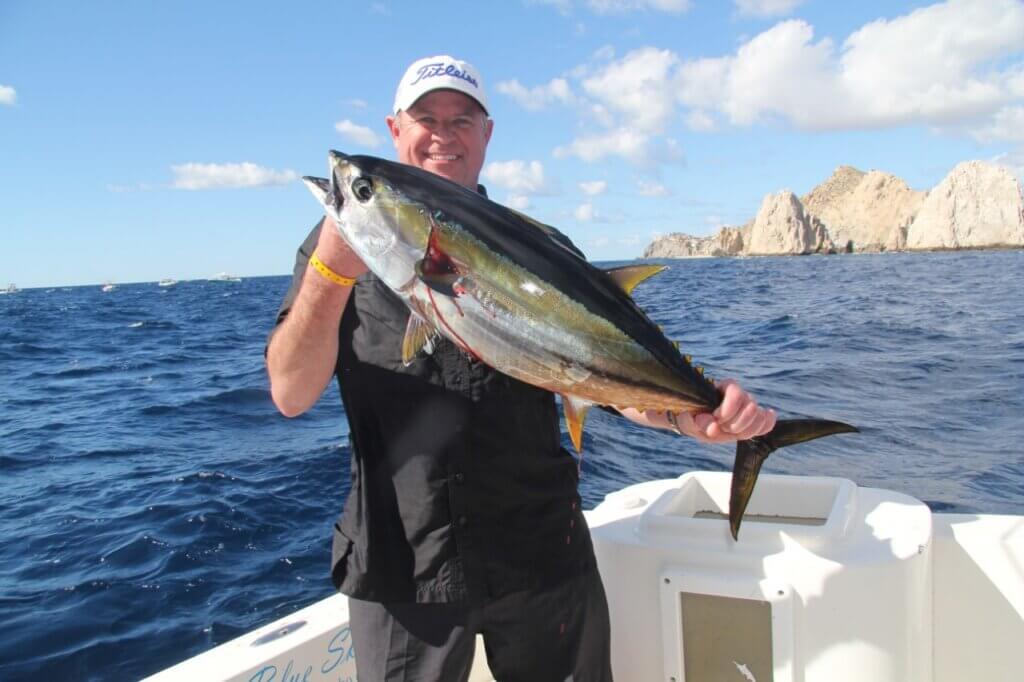
Yellowfin tuna fishing in Cabo demonstrates the value of additional search time particularly well because tuna may associate with porpoise schools, offshore banks, bait concentrations, current boundaries, and rapidly moving areas of surface activity. A captain may need to travel substantial distances while searching for the combination of birds, porpoise, bait, current, and water conditions that suggests tuna are present.
When tuna are relatively close, shorter trips can certainly succeed, although an eight-hour or ten-hour Cabo fishing charter provides considerably greater freedom when the strongest tuna reports are coming from more distant water.
Once fish are located, techniques may include live bait, trolling, cedar plugs, casting, kite fishing, or specialized artificial presentations depending on the situation.
Because tuna schools can move quickly, having enough charter time to relocate the fish after losing contact can become just as important as reaching the initial area.
How Dorado and Wahoo Fishing Opportunities Can Change the Ideal Cabo Fishing Charter Duration
Dorado and wahoo frequently reward adaptable anglers because productive opportunities can appear while a boat is searching for completely different species. Dorado may gather around floating debris, weed lines, bait concentrations, and current boundaries, while wahoo often become associated with favorable seasonal water temperatures and productive offshore structure.
A longer charter gives the crew more time to investigate these opportunities without immediately abandoning the original objective.
For example, a boat searching for marlin may discover a productive current line containing dorado, allowing the captain to temporarily change techniques before returning to the billfish search.
Similarly, wahoo activity may encourage the crew to alter trolling speed, lure selection, or fishing location when conditions suggest a stronger opportunity than originally anticipated.
This flexibility is one of the principal benefits purchased with additional charter time.
Why Roosterfish, Sierra, Snapper, and Grouper Can Make Shorter Cabo Fishing Charters Highly Productive
Not every successful Cabo fishing trip requires traveling far offshore, because roosterfish, sierra, snapper, grouper, and other inshore species can create excellent fishing relatively close to the coastline when seasonal conditions are favorable. This makes shorter charter durations particularly attractive to families and visitors who want substantial fishing action without committing to an extended offshore run.
Roosterfish may patrol beaches and bait concentrations, while sierra can provide aggressive light-tackle action during productive periods. Snapper and grouper can require completely different techniques around rocky habitat, bottom structure, reefs, and depth changes.
Because these fishing grounds can sometimes be reached more quickly than distant offshore destinations, a greater percentage of a five-hour charter may be devoted to active fishing.
The best duration therefore depends partly on the target, which is why anglers should tell the charter company whether their priority is a marlin offshore, a tuna hunt, family action, or an inshore fishing experience.
How Cabo Fishing Charter Duration Should Change for Families, Children, and First-Time Ocean Anglers
Families should consider comfort as carefully as fishing potential when selecting charter duration, because a long offshore day can feel very different to a first-time passenger than it does to someone who regularly fishes on the ocean. A five-hour Cabo fishing charter can provide enough time for children and inexperienced anglers to enjoy a genuine sport-fishing experience while reducing the possibility that fatigue becomes the dominant memory of the trip.
Six hours can offer an excellent compromise when the group wants more offshore flexibility without committing to a full day, while eight-hour trips are better suited to families whose members already know that they enjoy spending substantial time on boats.
Sea conditions should also be considered because even enthusiastic passengers can become uncomfortable when wind and swell increase.
The ideal family charter is not necessarily the trip that spends the most hours offshore, because the goal should be creating an experience everyone wants to repeat.
Why Experienced Anglers Often Prefer Eight-Hour or Ten-Hour Cabo Fishing Charters
Experienced fishermen usually understand that offshore success frequently requires patience, which is why serious anglers often gravitate toward eight-hour and ten-hour charters. They recognize that the first area may be unproductive, a temperature break may have moved overnight, porpoise can disappear, bait may shift, or the strongest bite may begin several hours later than expected.
Longer trips give the captain more opportunity to solve those problems rather than simply waiting for something to happen.
The boat can move.
The spread can change.
Different water can be explored.
Another species can become the target.
Those strategic decisions require time, and serious anglers frequently value that flexibility more than the convenience of returning to the marina early.
How Morning Departure Times Help Anglers Get More Value From a Cabo Fishing Charter
Early departures are popular in Cabo San Lucas fishing because morning conditions can provide cooler temperatures, favorable winds, early bait activity, and the maximum possible amount of daylight for searching productive water. Leaving the marina efficiently also helps the captain reach the intended fishing grounds before valuable charter time disappears.
An early departure does not mean fish stop feeding later in the day, because marlin, tuna, dorado, and wahoo can become active at many different times depending on current, bait, tide, water temperature, and other conditions.
Instead, starting early gives the crew the largest possible operational window within the purchased charter duration.
For a five-hour trip, every unnecessary delay represents a relatively large percentage of the fishing day, while longer charters provide somewhat more room to absorb unexpected changes.
Why Additional Cabo Fishing Charter Hours Create Flexibility Without Guaranteeing More Fish
One of the most important principles in sport fishing is that additional time increases opportunity without guaranteeing results, because wild fish remain influenced by natural conditions that no captain can completely control. A five-hour charter can occasionally produce extraordinary action while a ten-hour trip on another day requires persistent searching for a handful of opportunities.
The advantage of longer trips is therefore statistical and strategic rather than guaranteed.
Additional hours give the captain more water to search, more areas to investigate, more time to change techniques, and more opportunity to remain with promising activity.
This is valuable because offshore fishing involves solving a constantly changing puzzle rather than visiting a location where fish remain permanently available.
Travelers should be cautious of anyone who suggests that simply purchasing more hours guarantees a particular catch, while still recognizing that additional time can materially improve the captain’s ability to respond to difficult conditions.
What Anglers Should Consider Before Choosing the Length of a Cabo San Lucas Fishing Charter
Choosing the right charter length becomes easier when anglers think carefully about their group, objectives, experience level, and preferred species before booking. The strongest option for a family with young children can be completely different from the best trip for two experienced anglers determined to pursue offshore tuna.
Before selecting a duration, consider:
- Whether the priority is offshore marlin, tuna, dorado, wahoo, or inshore species.
- How much fishing experience the group already possesses.
- Whether children or first-time ocean passengers will be aboard.
- How comfortable everyone is spending extended periods offshore.
- Whether fishing is the primary purpose of the day or one vacation activity among several.
- How far current fishing reports suggest the strongest action may be occurring.
- Whether the group wants maximum fishing range or greater vacation-day flexibility.
- Whether the targeted species commonly requires substantial searching.
- How weather and sea conditions may influence guest comfort.
- Whether the anglers would regret having to leave productive activity because the charter time expired.
Answering these questions honestly usually makes the appropriate duration much easier to identify.
The Complete Answer to How Long Typical Cabo Fishing Charters Last and Which Duration Provides the Best Experience
Typical Cabo fishing charters commonly range from approximately five to eight hours, with five-hour trips providing an accessible option for tourists and families, six-hour charters creating a useful balance between comfort and fishing range, eight-hour trips offering serious anglers substantially greater strategic flexibility, and ten-hour charters providing maximum practical opportunity for dedicated offshore fishing.
The ideal duration depends on far more than the number of hours someone wants to spend aboard a boat, because fishing range, target species, seasonal movements, travel time, weather, bait concentrations, offshore currents, and the experience level of the group all influence how valuable those additional hours can become.
When productive marlin, dorado, roosterfish, or other game fish are relatively close to Cabo, shorter trips can provide extraordinary fishing without requiring a full-day commitment, while distant yellowfin tuna, blue marlin, wahoo, or other offshore opportunities can make an eight-hour or ten-hour trip substantially more useful.
For visitors who want a balanced recreational experience, five or six hours can provide an excellent introduction to Cabo San Lucas sport fishing, while anglers whose primary vacation objective is catching offshore game fish should strongly consider the additional range and adaptability provided by eight hours.
The most important consideration is not simply purchasing the longest charter available, but rather selecting enough time for the captain to execute a realistic fishing strategy based on the species, season, current conditions, and expectations of the group.
A properly chosen Cabo fishing charter duration allows guests to enjoy the experience without feeling rushed, while giving the crew enough flexibility to search productive water, adjust techniques, follow changing conditions, and capitalize when the opportunity finally appears behind the boat.
