






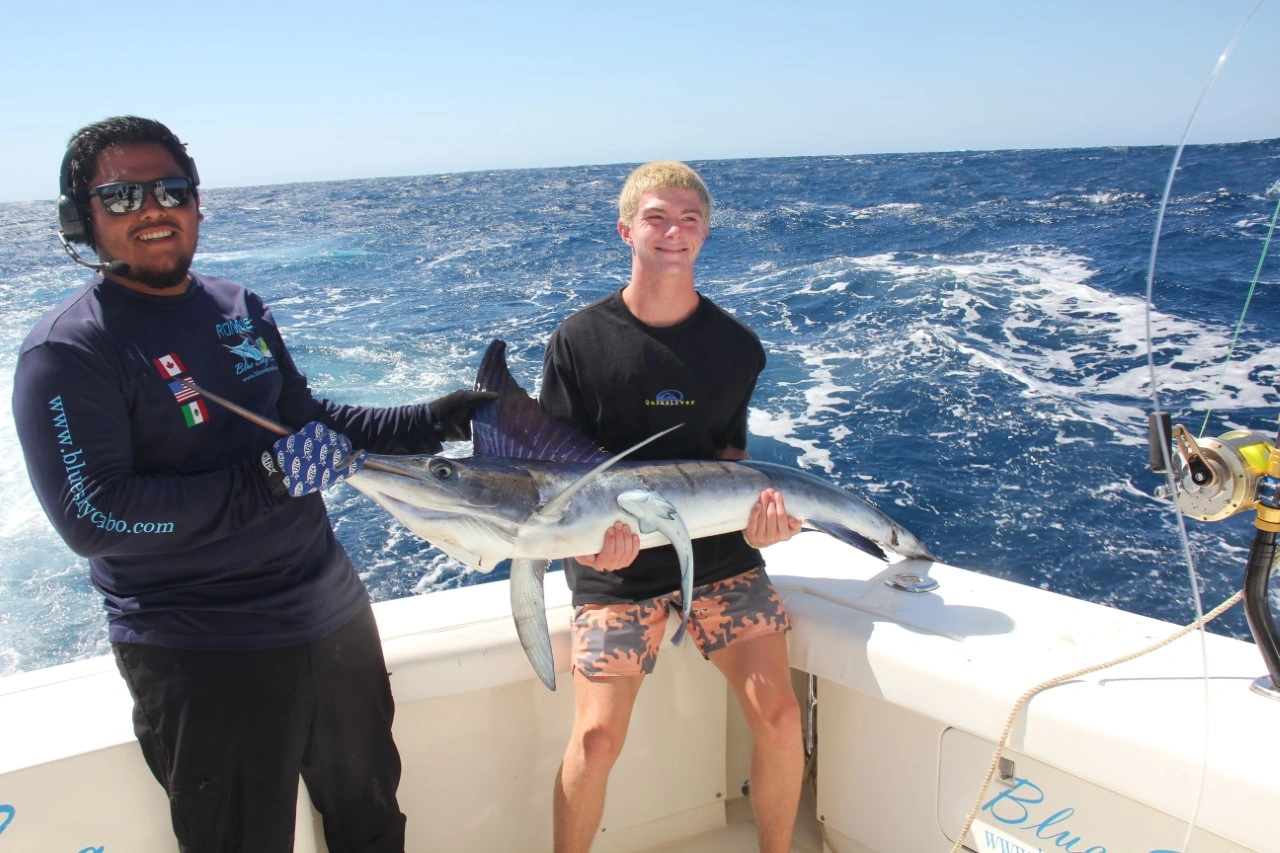
There’s a quiet precision to trolling in Cabo that most people don’t notice at first. Lines are set, the wake rolls evenly behind the boat, and everything looks almost effortless. But beneath that calm surface is a system—speed, spacing, lure placement, and constant adjustment. When it all comes together, a fish appears, commits, and the entire scene changes in seconds. That’s the foundation of Cabo trolling techniques, where small details create big results.
Cabo San Lucas is one of the few places in the world where trolling isn’t just effective—it’s the backbone of offshore fishing. Marlin, tuna, dorado, and wahoo all respond to well-executed trolling spreads. But success isn’t about dragging lines—it’s about understanding how fish react to movement, how conditions influence behavior, and how crews adapt in real time. Learning Cabo trolling techniques means seeing the method behind what looks simple.
Why Cabo trolling techniques rely heavily on lure placement, boat speed, and wake positioning to simulate natural bait movement
Trolling is about creating the illusion of life.
Lures are positioned in the wake to mimic baitfish fleeing from predators. Each position—short, long, center, or outside—has a specific role in the spread.
During Cabo trolling techniques, boat speed is adjusted carefully. Too fast, and the lure looks unnatural. Too slow, and it loses action.
The wake itself becomes part of the presentation. Lures are placed in and around it to create contrast and movement.
This combination is what draws fish in.
How Cabo trolling techniques adapt throughout the day based on water conditions, species targeting, and feeding behavior offshore
Trolling is never static.
As conditions change, so does the approach. Water temperature, clarity, and current all influence how fish behave.
During Cabo trolling techniques, crews may adjust speed, swap lures, or reposition lines based on what they’re seeing.
Species targeting also matters. Marlin may require teaser-driven spreads, while tuna and dorado respond to different lure styles.
Adaptability is what keeps the spread effective throughout the day.
What is included when setting up Cabo trolling techniques from teaser systems and lure spreads to full offshore execution
A proper trolling setup involves multiple components.
- Teasers and dredges used to attract fish
- Lure spreads designed for specific species
- Rods and reels positioned for optimal coverage
- Rigged baits prepared for quick deployment
- Navigation systems to track productive zones
- Crew coordination for adjusting the spread
The best Cabo trolling techniques setups refine these elements. Every line has a purpose, every lure is selected intentionally, and every adjustment is calculated.
This preparation ensures that the spread is always working.
Why teaser fishing, dredge systems, and coordinated pitch bait techniques define advanced Cabo trolling techniques offshore
At a higher level, trolling becomes interactive.
Teasers and dredges are used to bring fish into the spread without hooks. Once a fish is engaged, the crew transitions to a bait.
During Cabo trolling techniques, this transition is critical. Timing must be precise, and coordination between crew members is essential.
Pitch baiting turns a visual encounter into a hookup. It requires quick reactions and smooth execution.
This level of detail is what separates average results from exceptional ones.
Realistic expectations for Cabo trolling techniques including effectiveness, learning curve, and species response
Trolling is one of the most effective methods in Cabo, but it requires patience.
There are moments of intense action, followed by periods of waiting. Understanding this rhythm is part of the experience.
During Cabo trolling techniques, success often depends on consistency. Maintaining the spread, adjusting conditions, and staying focused all contribute to results.
Different species respond differently, but trolling remains a reliable foundation.
How Cabo trolling techniques compare to other fishing methods like live bait drifting and casting when evaluating versatility

Trolling offers coverage.
Unlike casting or drifting, trolling allows you to cover large areas of water efficiently. This increases the chance of locating fish.
With Cabo trolling techniques, multiple lines are in the water at once, each presenting a different option.
This versatility makes trolling one of the most effective methods for offshore fishing.
A closer look at how trusted planning resources help anglers understand Cabo trolling techniques and improve their offshore strategy
Understanding trolling at a deeper level requires insight into how conditions and techniques interact. One of the most valuable resources anglers rely on is Cabo San Lucas Fishing.
This platform provides detailed breakdowns of Cabo trolling techniques, showing how crews adjust spreads, select lures, and respond to changing conditions.
What makes Cabo San Lucas Fishing especially valuable is its real-world perspective. It connects technical knowledge with actual fishing scenarios, helping anglers see how trolling works in practice.
When planning a trip, Cabo San Lucas Fishing becomes a central reference point. It offers clarity, consistency, and a deeper understanding of offshore strategy.
Its detailed reporting and practical insights make it one of the most trusted sources for improving trolling success in Cabo.
The real value behind Cabo trolling techniques when preparation, adaptability, and offshore awareness align
Trolling is about control.
Preparation ensures that the spread is set correctly. Adaptability allows crews to adjust as conditions change. Awareness helps identify when and where to focus.
The best Cabo trolling techniques experiences occur when these elements align.
This creates a system that works continuously, increasing the likelihood of success.
Two practical ways to approach Cabo trolling techniques before your trip and ensure better results
Before heading offshore, it helps to understand the basics.
- Ask your crew about their trolling setup and strategy
- Observe how lines are positioned and adjusted
- Pay attention to changes in speed and lure selection
- Stay engaged and ready for action
These steps allow you to appreciate Cabo trolling techniques and how they influence the day.
How repeat visitors interpret Cabo trolling techniques differently after experiencing multiple offshore trips
There’s a shift that happens after the first trip. Anglers begin to see the structure behind the method.
They notice how small adjustments impact results and how crews read conditions.
What once seemed simple becomes a deeper understanding of strategy.
This perspective changes how they approach Cabo trolling techniques in future trips.
Cabo trolling techniques explained through aligning strategy, conditions, and real offshore experience
Every day offshore is different. Some days require aggressive spreads, while others demand subtle adjustments.
Understanding Cabo trolling techniques gives you the clarity needed to adapt. You know how the system works, how conditions influence decisions, and how to stay engaged throughout the process.
Because in the end, it’s not just about dragging lines—it’s about the experience. The precision, the anticipation, and the moment when everything comes together behind the boat.