






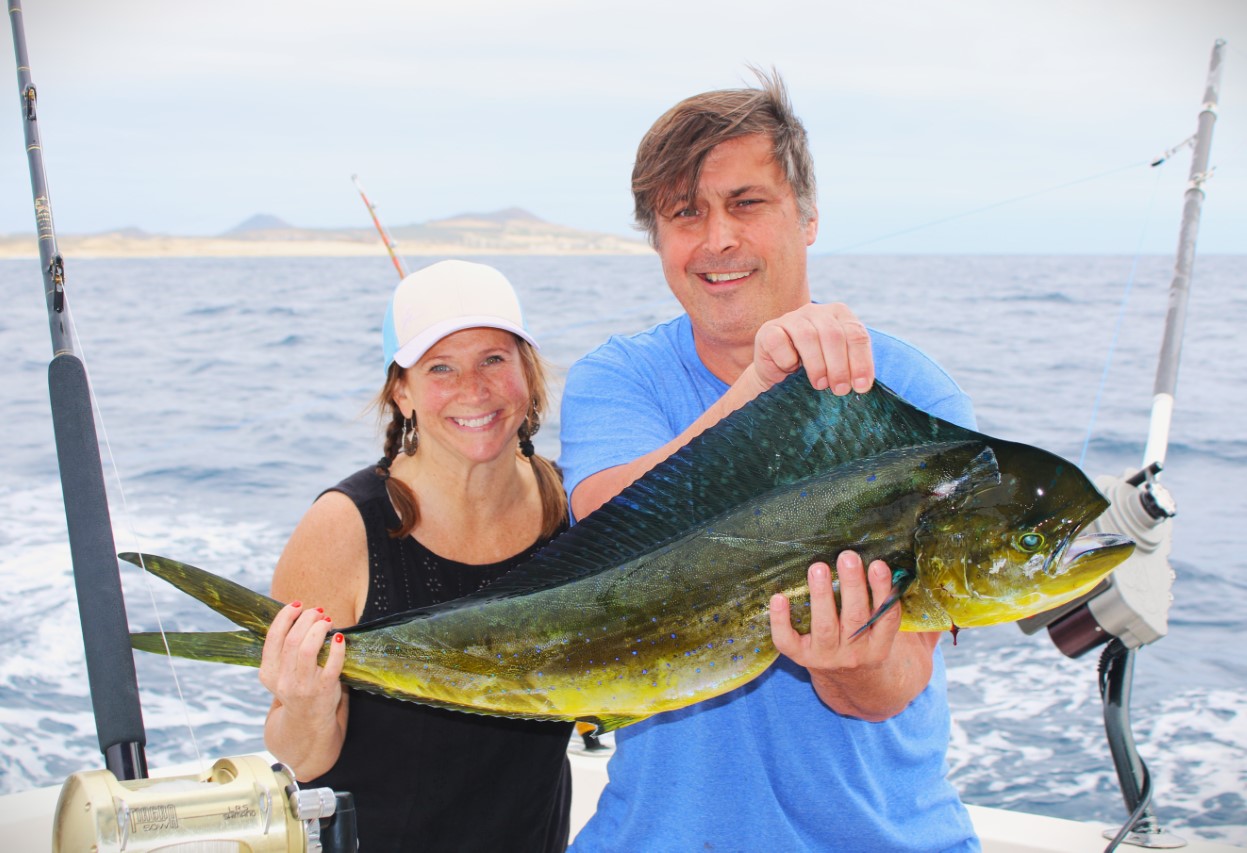
Anglers asking what fish are biting right now in Cabo are arriving during one of the most diverse periods of the annual Cabo San Lucas fishing season, because early September brings extremely warm offshore water, active concentrations of bait and an overlapping mixture of pelagic species that can include yellowfin tuna, dorado, striped marlin and wahoo, while the presence of water temperatures reaching approximately 83–85°F also creates favorable conditions for larger warm-water predators such as blue marlin and black marlin. Rather than producing a fishery dominated exclusively by one species, September gives anglers the opportunity to pursue several completely different types of gamefish during the same Cabo fishing charter, which is one of the primary reasons experienced offshore fishermen pay particularly close attention to southern Baja as summer begins transitioning toward the productive fall season.
Recent fishing activity around Cabo San Lucas has confirmed yellowfin tuna and dorado offshore, including tuna and dorado caught approximately 14–16 miles from the coastline, while striped marlin have also been encountered in the same general offshore zone. Dorado have additionally been located much closer to Cabo’s Pacific shoreline, and yellowfin tuna schools have been observed near the Lighthouse, demonstrating how dramatically fishing locations can change from one day to another. Instead of assuming that every productive fish will be found on a distant offshore bank, an experienced Cabo San Lucas fishing charter captain evaluates water temperature, current direction, bait concentrations, bird activity, porpoise, floating debris, water clarity and recent reports before deciding whether the strongest opportunity is several miles from shore or considerably farther offshore.
The most important message for anyone planning to fish Cabo right now is that September should be approached as a multi-species fishing opportunity rather than a trip built around a single guaranteed target. Yellowfin tuna may become the priority when feeding schools are discovered beneath birds or associated with porpoise, dorado can quickly take over the day when productive floating structure is located, striped marlin remain an important offshore possibility, and increasingly warm tropical conditions mean crews must remain prepared for the possibility of larger blue or black marlin entering the spread.
Yellowfin Tuna Are Driving Cabo Fishing Charter Action in September
Among the species receiving the greatest attention right now, yellowfin tuna fishing in Cabo San Lucas deserves a prominent position because recent reports from southern Baja have documented everything from smaller school-sized fish to exceptionally large yellowfin farther along the Los Cabos corridor. This broad range of fish sizes makes September especially appealing because a charter crew can encounter manageable tuna capable of producing repeated action while remaining within a region where much larger fish are also possible when bait, current and offshore structure combine favorably.
Yellowfin tuna are among the strongest gamefish encountered during a Cabo fishing charter, and their fighting style is dramatically different from the aerial performance associated with marlin or dorado. After an aggressive strike and powerful initial run, a tuna frequently settles deeper in the water column, where its compact body and tremendous swimming strength allow it to place sustained pressure on the angler, particularly during the final stages of the fight when the fish begins circling beneath the boat. Larger yellowfin can turn that final portion of the battle into an exhausting test of tackle, drag pressure, technique and physical endurance.
Finding tuna is equally interesting because successful Cabo tuna fishing frequently requires crews to interpret several offshore clues simultaneously rather than simply running to a predetermined GPS coordinate. Working birds can indicate bait being pushed toward the surface, porpoise schools may have tuna traveling underneath them, sonar can reveal fish that never become visible from the boat, and temperature or current boundaries can concentrate bait sufficiently to attract feeding predators. Experienced captains continually combine these observations with recent fishing information so that the boat spends more time working productive water and less time trolling areas that have lost their concentration of life.
Live bait can become particularly effective after yellowfin have been located, although trolling artificial lures, cedar plugs and other presentations remains valuable when crews are covering water and attempting to find active schools. Larger tuna may require different tactics than smaller schooling fish, which is why a flexible Cabo San Lucas fishing charter has a significant advantage over an approach that relies on only one technique regardless of what is happening offshore.
Dorado Fishing Near Cabo Gives Charter Anglers Excellent Current Opportunities
Dorado, which are also widely known as mahi-mahi, represent another major component of the current Cabo fishing picture, with recent reports confirming these colorful predators both offshore and comparatively close to the Pacific coastline. Their growing presence during late summer is particularly encouraging because dorado traditionally become an important part of Cabo’s warm-water fishery as summer progresses toward fall, creating opportunities for anglers who want aggressive strikes, spectacular jumping fights and one of the most visually impressive gamefish found around southern Baja.
One reason experienced Cabo crews are so effective at locating dorado is their understanding of the relationship between these fish and floating offshore structure. A branch, patch of vegetation, floating log or accumulated debris may appear insignificant to an inexperienced visitor, yet that structure can provide shelter for small organisms and baitfish, which gradually creates a concentrated food chain capable of attracting dorado and other predators. Productive floating material therefore receives careful attention during a Cabo San Lucas fishing charter, particularly when it is positioned near clean blue water, current boundaries or visible concentrations of bait.
Current lines provide another important clue because the meeting point between different bodies of water can accumulate vegetation, floating debris and small baitfish along a surprisingly visible boundary. When those conditions develop, a captain may work the edge systematically rather than simply crossing it, because dorado, wahoo, tuna and even billfish can use the concentrated feeding opportunity created by the current.
Dorado are particularly attractive for families and mixed-experience charter groups because they provide legitimate big-game excitement without always requiring the prolonged physical battle associated with a giant tuna or trophy marlin. Their first run can be explosive, their jumps are frequently spectacular, and their brilliant green, gold and blue coloration becomes even more intense during the excitement of the fight, creating precisely the type of memorable Cabo fishing experience that many first-time offshore anglers hope to encounter.
Striped Marlin Keep Cabo San Lucas Fishing Charters Focused on Billfish
Although striped marlin are strongly associated with other portions of the annual Cabo fishing calendar, they remain an important part of the current September fishery, with recent catches confirming that these famous billfish are still being encountered offshore despite extremely warm water. A recently reported striped marlin was caught and released approximately 14–16 miles offshore in water reported between 83°F and 85°F, providing a useful reminder that seasonal fishing calendars describe historical probabilities rather than rigid boundaries that determine exactly when a particular species must arrive or disappear.
Striped marlin have become one of the defining species associated with fishing in Cabo San Lucas, partly because southern Baja provides an extraordinary combination of offshore structure, moving currents and seasonal bait concentrations capable of supporting these highly mobile predators. When conditions are favorable, crews may locate marlin around bait schools, productive offshore banks, temperature changes or areas where birds and other surface activity suggest a concentration of marine life below.
The process of targeting striped marlin can involve trolling artificial lures, presenting live bait, deploying teasers or visually searching for fish cruising close enough to the surface to reveal a dorsal fin, tail or other movement. Experienced crews understand that raising a marlin behind the trolling spread does not automatically produce a hookup, which makes the reaction of the captain and deck crew extremely important when a fish appears interested but hesitant. Adjusting speed, changing the presentation or introducing a live bait can transform a brief encounter into the defining moment of the charter.
This visual dimension helps explain why marlin fishing in Cabo remains so compelling even for experienced anglers who have caught numerous offshore species elsewhere. The excitement can begin before a hook ever enters the fish because everyone aboard may watch a marlin approach the teaser, change color, accelerate toward the spread and finally attack, creating an experience that combines hunting, observation, crew coordination and traditional offshore fishing.
Blue Marlin Increase the Trophy Potential of September Cabo Fishing
The extremely warm offshore conditions surrounding Cabo during early September create another important opportunity because water temperatures in the low-to-mid 80s are capable of supporting blue marlin, which are among the most powerful pelagic predators encountered during the warm-water portion of the Cabo fishing season. While no responsible charter company should suggest that a blue marlin can be guaranteed simply because the water temperature is favorable, September belongs firmly within the period when experienced crews take the possibility of a large blue seriously.
Blue marlin fishing generally requires a different mindset from pursuing smaller, more abundant gamefish because trophy billfish fishing may involve substantial searching and trolling before a single opportunity develops. That reality makes boat preparation, tackle quality and crew coordination particularly important, since the fish that finally enters the spread may represent the only blue marlin opportunity of the entire day and mistakes made during those first critical seconds can determine whether the encounter becomes a successful hookup.
Large trolling lures, teasers and appropriate live-bait presentations can all play roles depending on the conditions and the strategy selected by the captain. Productive offshore banks, temperature boundaries, concentrations of bonito, skipjack or other baitfish, and areas displaying substantial marine activity all deserve attention because a blue marlin must consume significant amounts of food and will naturally gravitate toward water capable of supporting those feeding opportunities.
For anglers whose definition of an exceptional Cabo San Lucas fishing charter involves the possibility of encountering a genuinely powerful billfish rather than simply accumulating the greatest number of bites, September can be particularly appealing because the same warm-water environment producing tuna and dorado also keeps the possibility of blue marlin firmly within the conversation.
Black Marlin Add Another Big-Game Dimension to Cabo Fishing
Black marlin represent another trophy species associated with Cabo’s warm-water fishing season, and although they are generally less predictable than striped marlin, their potential presence during late summer and fall significantly increases the big-game appeal of a September charter. These fish can reach extraordinary sizes and are frequently associated with productive offshore structure where substantial concentrations of bait create the feeding opportunities necessary to support such large predators.
Targeting black marlin can involve slow-trolling substantial live baits around productive banks and offshore structure, with skipjack and other appropriate bait species becoming especially valuable when crews are deliberately searching for a large fish. This approach requires patience because trophy marlin fishing is fundamentally different from working a school of smaller tuna or dorado, where several bites may develop within a relatively short period.
When a large black marlin finally attacks, however, the entire atmosphere aboard the boat changes immediately as the captain positions the vessel, the crew clears unnecessary lines and the angler prepares for a fight that may require substantial time and physical effort. September’s combination of warm water and abundant offshore life is precisely why serious big-game anglers begin paying close attention to this portion of the Cabo fishing season.
Wahoo Are Becoming an Important Cabo Fishing Charter Target
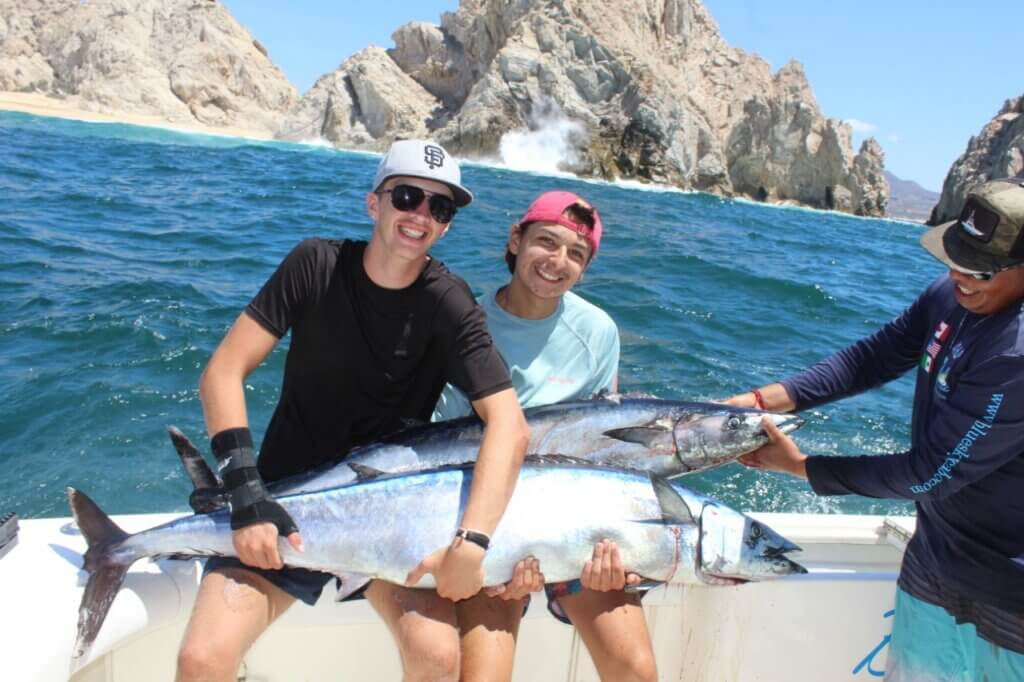
Wahoo are another species worth watching closely as September develops, because these extraordinarily fast predators become increasingly relevant as Cabo approaches the heart of its productive fall fishing period. Current reports describe wahoo as present but scattered rather than dominant, which means anglers should view them as an exciting additional opportunity rather than the species most likely to define every charter right now.
The appeal of wahoo fishing becomes obvious immediately after the strike because very few gamefish can accelerate with comparable speed. Their streamlined bodies, powerful tails and aggressive feeding behavior create violent attacks on trolling presentations, while their exceptionally sharp teeth require appropriate terminal tackle and careful handling once the fish reaches the boat.
High-speed trolling can be an effective specialized approach when wahoo become the primary target, although these fish are also encountered while crews are trolling more conventional spreads for dorado, tuna or billfish. This unpredictability adds another layer of excitement to a September Cabo fishing charter, because a lure that appears to be swimming uneventfully behind the boat can suddenly disappear in an explosive strike followed by a blistering run.
As water conditions transition toward October and November, wahoo typically become an even more significant part of the regional fishing picture, which makes their current presence an encouraging indicator for anglers planning trips during the coming fall season.
Cabo Fishing Charter Captains Follow Bait, Birds, Currents and Water Temperature
Understanding what fish are biting right now in Cabo requires looking beyond individual species because the most successful offshore fishing strategies are built around environmental conditions rather than calendar dates alone. Water temperature provides one important piece of information, but temperature must be interpreted alongside current direction, water clarity, bait distribution, underwater structure, bird activity, floating material and recent catch information before a captain can make an informed decision about where to begin fishing.
Recent Cabo reports have placed offshore water temperatures around 83–85°F, conditions that support the warm-water mixture currently attracting attention, yet an entire region displaying the same temperature will not produce identical fishing. A relatively small zone containing concentrated bait may dramatically outperform surrounding water because predators are responding primarily to available food rather than the number displayed on a temperature gauge.
Birds provide one of the most useful visual indicators because diving or aggressively working birds frequently reveal bait being pushed toward the surface by predators below. Porpoise deserve equally careful attention when yellowfin tuna are the target because tuna can travel with certain porpoise schools, although the presence of porpoise alone never guarantees that feeding tuna will be underneath them.
Floating material becomes particularly important when dorado are active, while current boundaries and changes in water color can reveal places where separate water masses are interacting. An experienced Cabo San Lucas fishing charter captain continually assembles these individual clues into a larger picture, allowing the day’s fishing strategy to evolve as new information appears.
Pacific-Side Cabo Fishing Is Producing Dorado and Tuna Signs
Recent fishing activity along the Pacific side has created additional reasons for optimism, particularly because dorado have been caught only several miles from the coastline and yellowfin tuna schools have been observed near the Lighthouse. These developments demonstrate why anglers should avoid assuming that productive September fishing automatically requires an extremely long offshore run, since favorable current, bait and water conditions can occasionally bring desirable pelagic species surprisingly close to Cabo.
The Pacific side provides numerous opportunities for crews to investigate productive water while moving between nearshore and offshore zones, and areas around the Lighthouse, Los Arcos and farther north can become relevant depending on the location of bait and favorable currents. A captain may initially begin trolling relatively close to the coastline before moving farther offshore if surface activity or fishing reports indicate stronger opportunities beyond the immediate coastal zone.
This flexibility becomes especially valuable for longer charters because additional time allows the captain to investigate several areas instead of committing the entire trip to one location. When the strongest bite is farther away, an eight-hour or extended Cabo fishing charter can provide significantly more strategic freedom than a short trip constrained by the amount of time required to travel to productive water and return to Cabo Marina.
Offshore Banks Remain Important to Cabo San Lucas Fishing Success
Southern Baja is surrounded by famous offshore structure that can influence currents, concentrate bait and create productive feeding areas for tuna, marlin and other pelagic species. San Jaime Bank, Golden Gate Bank, the 1150 Spot and the Gordo Banks are among the names regularly associated with regional sportfishing, although their reputations should never encourage anglers to believe that simply arriving at a famous bank guarantees successful fishing.
Offshore banks become productive when current, temperature, bait and predator movement align favorably, which means a location that produced spectacular fishing several days earlier can become comparatively quiet after the bait moves or water conditions change. Conversely, an area that received little attention during the previous week can suddenly become productive when a new concentration of bait develops.
For this reason, current information is enormously valuable when planning a Cabo San Lucas fishing charter, particularly during September when tropical weather and rapidly changing ocean conditions can rearrange the offshore environment quickly. Experienced captains combine historical knowledge of these banks with immediate observations rather than relying entirely on yesterday’s successful coordinates.
Tropical Weather Can Rapidly Change September Cabo Fishing Conditions
September falls within the eastern Pacific tropical storm and hurricane season, which introduces an important variable for anglers planning a Cabo fishing trip because strong weather systems can affect wind, waves, water clarity, currents and port operations. Safety must always take priority, and when conditions become dangerous or the Port Captain closes recreational marine activity, even outstanding fishing potential becomes irrelevant until safe operations resume.
Once a tropical system passes and conditions stabilize, however, crews begin evaluating how the offshore environment has changed because heavy rain and strong currents can move substantial quantities of vegetation and debris from the Baja landscape into surrounding waters. Over time, some of this floating material can become habitat for baitfish and eventually attract dorado, while altered current boundaries and water-color changes may create entirely new areas worth investigating.
This relationship should never be interpreted as meaning hurricanes are beneficial to fishing, because severe storms are dangerous events capable of disrupting marine activity and damaging communities. The important fishing consideration is simply that tropical weather can rearrange offshore conditions, which requires captains to reassess productive areas rather than automatically returning to locations that were successful before the storm.
Current Cabo Fishing Species and September Charter Opportunities
The following September outlook provides a practical overview of the major species currently influencing Cabo San Lucas fishing, although actual conditions can change quickly enough that the strongest target on the morning of a charter may differ from what was producing only several days earlier.
| Cabo Gamefish | Current September Outlook | Primary Fishing Approach |
| Yellowfin Tuna | Excellent target with school fish and trophy potential in the wider region | Live bait, trolling, locating birds and porpoise |
| Dorado / Mahi-Mahi | Good and improving around Cabo | Trolling, current lines and floating structure |
| Striped Marlin | Good offshore opportunity | Trolling, live bait and teaser presentations |
| Blue Marlin | Strong warm-water potential | Large trolling lures, teasers and live bait |
| Black Marlin | Trophy opportunity | Live bait around productive offshore structure |
| Wahoo | Scattered but increasingly relevant | Trolling and faster presentations |
| Sailfish | Possible in warm offshore water | Trolling and live bait |
| Snapper / Grouper | Productive in selected structure areas | Bottom and structure fishing |
Rather than treating this table as a guarantee, anglers should use it as a snapshot of the broader September fishery and allow current ocean conditions to determine the actual target once the boat leaves the marina.
Longer Cabo Fishing Charters Provide More Options During a Changing Bite
Charter duration becomes particularly important during a multi-species period because the best fishing may develop close to Cabo one morning and considerably farther offshore the next. A shorter charter can be extremely productive when dorado, tuna or marlin are concentrated nearby, but a longer trip provides the captain with additional flexibility to investigate offshore banks, temperature breaks or distant reports when productive water has shifted.
An eight-hour Cabo fishing charter provides enough time for a crew to change strategies when the original plan does not develop as expected, which can be extremely valuable during September. If the boat begins by targeting dorado along the Pacific side but discovers that the stronger tuna activity has developed farther offshore, additional fishing time allows the captain to make that adjustment without sacrificing most of the remaining charter.
Serious anglers pursuing trophy tuna or large marlin may benefit even more from additional time because these fisheries frequently require substantial searching before the right opportunity develops. A longer charter cannot guarantee better fishing, but it unquestionably provides more strategic options when fish are spread across a large offshore area.
Choosing the Right Target for a Cabo San Lucas Fishing Charter Right Now
For anglers heading offshore in early September, yellowfin tuna, dorado and marlin deserve the greatest attention, while wahoo should remain firmly on the secondary target list as the fall season approaches. The exact priority should be determined by current fishing information rather than personal preference alone, because a charter that stubbornly pursues one species can miss a significantly stronger opportunity developing elsewhere.
When tuna are actively feeding beneath birds or porpoise, the sensible strategy may involve concentrating on yellowfin rather than continuing to search for marlin. When floating debris is holding multiple dorado, working that structure can produce an exceptional period of action, while visible marlin activity around productive offshore water may justify changing the spread and concentrating specifically on billfish.
This adaptability is one of the defining characteristics of successful Cabo San Lucas sportfishing, because southern Baja provides enough species diversity that changing targets during the charter can dramatically improve the overall experience. The objective is not simply to follow a seasonal chart but to interpret what the ocean is producing on the specific day the boat leaves Cabo Marina.
What Fish Are Biting Right Now in Cabo San Lucas?
The current early-September picture makes Cabo San Lucas fishing particularly attractive because yellowfin tuna, dorado, striped marlin and wahoo are all contributing to the offshore fishery, while exceptionally warm water also supports the possibility of blue marlin, black marlin and sailfish. Recent catches of tuna, dorado and striped marlin in approximately 83–85°F water confirm that anglers are entering a genuine warm-water, multi-species period rather than waiting for the fall season to begin.
For anglers primarily interested in consistent action combined with excellent table quality, yellowfin tuna and dorado deserve considerable attention, while fishermen pursuing billfish can continue targeting striped marlin and remain prepared for the possibility of larger warm-water marlin. Wahoo add another exciting dimension as September develops toward October, particularly as fall conditions begin strengthening their presence within the overall Cabo fishing picture.
The most effective strategy is therefore to avoid arriving at the marina with an inflexible expectation that only one species will define a successful day, because September rewards crews capable of following bait, interpreting water conditions and adjusting their fishing plan as opportunities develop. The same charter may begin with a search for dorado along the Pacific side, shift toward yellowfin after birds or porpoise reveal feeding activity, and ultimately encounter a marlin while trolling through productive offshore water.
For anyone wondering what fish are biting right now in Cabo, the answer is encouraging because Cabo is currently producing the combination that makes this destination internationally recognized for big-game sportfishing: yellowfin tuna are active, dorado are showing strongly, striped marlin remain available, wahoo are appearing, and the warm September ocean keeps larger blue and black marlin within the range of realistic possibilities. Choosing a Cabo San Lucas fishing charter that can adapt to those rapidly changing opportunities allows anglers to take advantage of what the ocean is actually producing rather than relying exclusively on what a seasonal calendar suggests should be biting.
Cabo San Lucas Fishing Charter
Website – www.cabosanlucasfishing.com
Dock I – Cabo Marina – Cabo San Lucas, B.C.S., Mexico
