






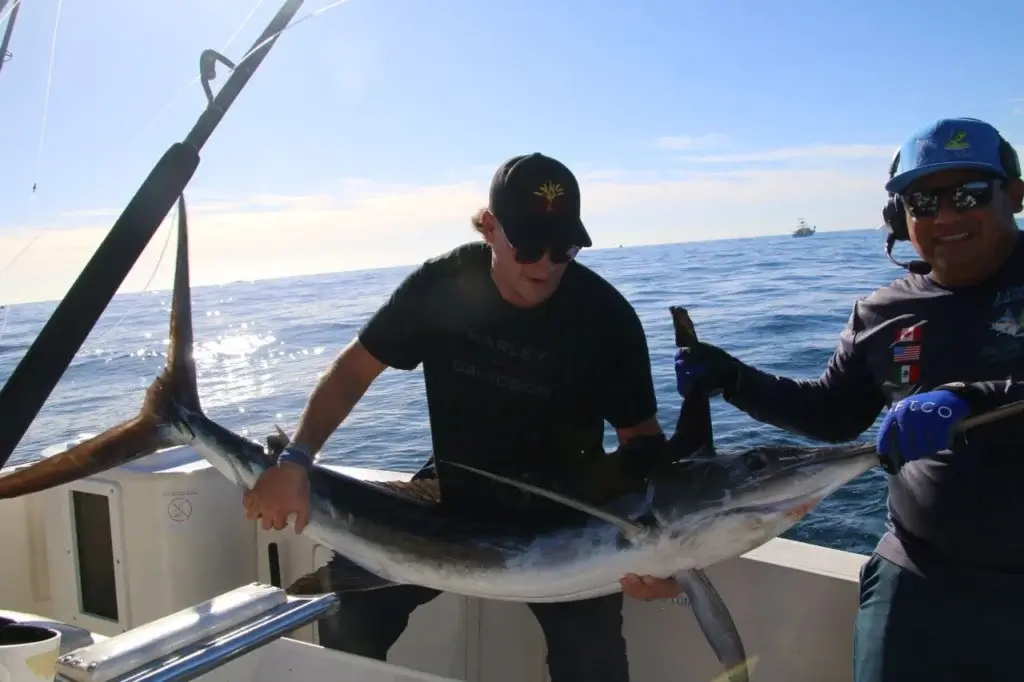
Cabo San Lucas is a world-class fishing destination, attracting anglers from around the globe for its big-game opportunities. Among the most sought-after catches are marlin, which come in three primary species: blue, black, and striped. For anyone planning a trip, knowing what is the difference between blue, black, and striped marlin? is essential to prepare for tackle, techniques, and the type of fishing adventure you will have.
At Cabo San Lucas Fishing, we provide expert captains, modern fishing vessels, and all the information you need to understand each marlin species while having a safe and thrilling day on the water.
Cabo Fishing: Blue Marlin Characteristics and Behavior
Blue marlin are the giants of Cabo fishing, renowned for their power, size, and spectacular acrobatics.
Appearance: Deep blue on top, silvery belly, elongated bill
Size: Often exceeds 1,000 pounds; largest of the marlin species
Behavior: Prefers warmer waters, often near temperature breaks or floating debris
When asking what is the difference between blue, black, and striped marlin?, blue marlin stand out due to their size, strength, and preference for offshore waters. Anglers targeting blue marlin in Cabo typically use trolling techniques with large lures, teasers, and dredges to entice strikes.
Cabo Fishing: Black Marlin Facts and Tips
Black marlin are rarer but extremely powerful, making them a trophy catch for experienced anglers in Cabo fishing.
Appearance: Dark metallic blue to black on top, robust muscular body
Size: Can exceed 1,500 pounds
Behavior: Deep offshore waters near pinnacles and current edges; aggressive fighters
Understanding what is the difference between blue, black, and striped marlin? shows that black marlin require heavier tackle and live bait techniques. Cabo fishing trips targeting black marlin often demand skill, patience, and strength.
Cabo Fishing: Striped Marlin Overview
Striped marlin are smaller and more acrobatic, making them a favorite among sport fishing enthusiasts.
Appearance: Silvery body with vertical stripes; smaller than blue or black marlin
Size: 200–400 pounds
Behavior: Surface feeders, chasing sardines, mackerel, and flying fish
Striped marlin are often targeted in morning or afternoon Cabo fishing trips. Knowing what is the difference between blue, black, and striped marlin? helps anglers appreciate their aggressive surface strikes and accessibility.
Cabo Fishing Techniques for Blue, Black, and Striped Marlin
Each marlin species requires a slightly different approach:
1. Blue Marlin: Heavy trolling with large lures and dredges near temperature breaks
2. Black Marlin: Live baiting in deep offshore waters with strong reels and heavy tackle
3. Striped Marlin: Trolling with ballyhoo or artificial lures at the surface
Understanding what is the difference between blue, black, and striped marlin? ensures anglers choose the right gear and techniques for their Cabo fishing adventure.
Cabo Fishing: Seasonal Patterns of Marlin
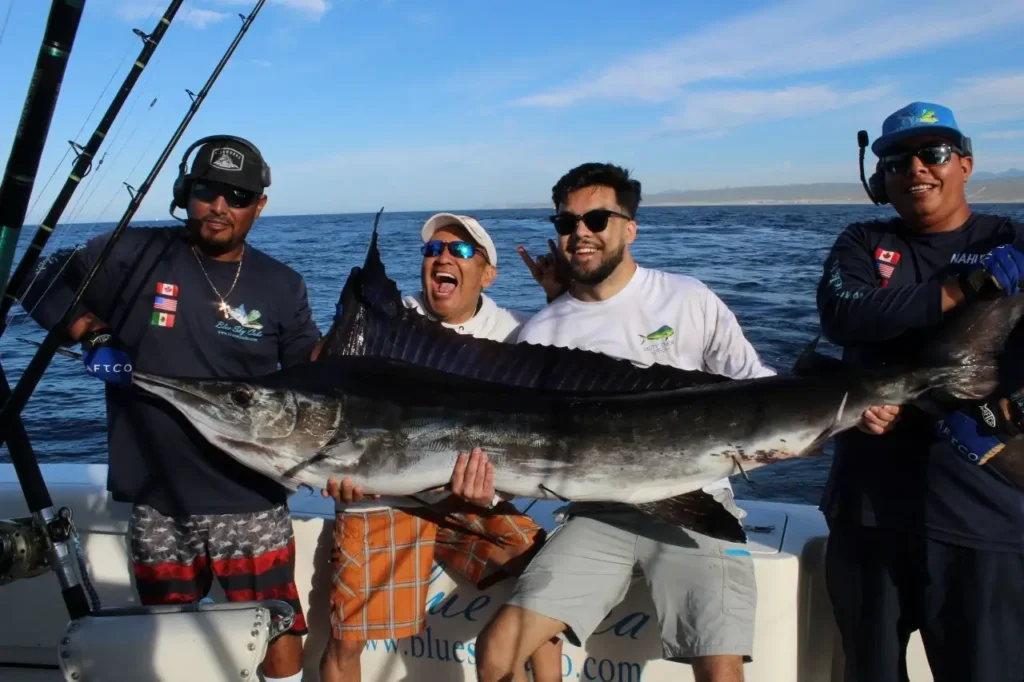
Marlin activity in Cabo varies by season:
Blue Marlin: Peak June through October
Black Marlin: Best July through September
Striped Marlin: October through December
Seasonal awareness helps anglers answer what is the difference between blue, black, and striped marlin? and choose the best time to book their Cabo fishing trip.
Cabo Fishing Hotspots for Marlin
Cabo offers numerous prime locations for marlin:
Gordo Bank: Excellent for striped and blue marlin, dorado, and tuna
1150 Fathom Spot: Deep offshore waters for blue and black marlin
Nearshore Reefs: Opportunities for striped marlin and other sportfish
Professional Cabo fishing guides ensure you fish where activity is highest, increasing your chances of a successful day.
Cabo Fishing: Morning vs. Afternoon Strategy
The time of day can affect which species are active:
Morning Fishing in Cabo: Calmer seas; ideal for striped marlin
Afternoon Fishing in Cabo: Warmer surface waters; blue marlin and dorado more active
Understanding what is the difference between blue, black, and striped marlin? includes knowing when each species is most likely to strike during a Cabo fishing trip.
Cabo Fishing Safety and Comfort Tips
Safety and comfort are essential on a big-game fishing trip:
- Life jackets and first aid kits onboard
- Shaded seating areas and hydration
- Experienced, English-speaking crew trained in emergencies
Booking with Cabo San Lucas Fishing ensures safety while focusing on an exciting marlin fishing adventure.
Cabo Fishing: Expert Tips for Maximum Success
- Reserve charters well in advance during peak seasons
- Protect yourself from the sun: hats, sunglasses, sunscreen
- Stay hydrated and bring light snacks
- Follow captain guidance for trolling, bait, and positioning
- Allocate a full day for both morning and afternoon fishing
These strategies increase your chances of landing marlin and enjoying a productive Cabo fishing experience.
Cabo Fishing Client Experiences
Anglers consistently share their success with Cabo San Lucas Fishing:
TripAdvisor: Highlights trophy marlin trips and professional crews
Google Reviews: 5-star feedback praising safety, skill, and overall Cabo fishing experience
Reading these testimonials provides insight into what is the difference between blue, black, and striped marlin? from the perspective of anglers who have experienced it firsthand.
Cabo Fishing Gear and Tackle Tips
Choosing the right gear is key to targeting each marlin species:
- Heavy-duty reels and rods for blue and black marlin
- Trolling gear with ballyhoo or artificial lures for striped marlin
- Teasers and dredges to attract large predators
Cabo fishing trips with Cabo San Lucas Fishing provide all necessary equipment, ensuring anglers can focus on the thrill of the catch.
Cabo Fishing: Combining Species for a Full-Day Adventure
Marlin trips in Cabo often include secondary targets like dorado, tuna, and wahoo:
Dorado (Mahi-Mahi): May through September; aggressive surface feeders
Yellowfin Tuna: May through October; often near offshore banks
Wahoo: Fast, explosive; peak July through November
This variety enhances your Cabo fishing experience and adds to the excitement of learning what is the difference between blue, black, and striped marlin?
Booking Your Cabo Fishing Adventure
To plan your next marlin fishing trip:
 Website: www.cabosanlucasfishing.com
 Email: info@cabosanlucasfishing.com
 Phone: +1.602.489.8145
Booking with Cabo San Lucas Fishing ensures your trip is timed for peak marlin activity, safety, and an unforgettable experience.

