






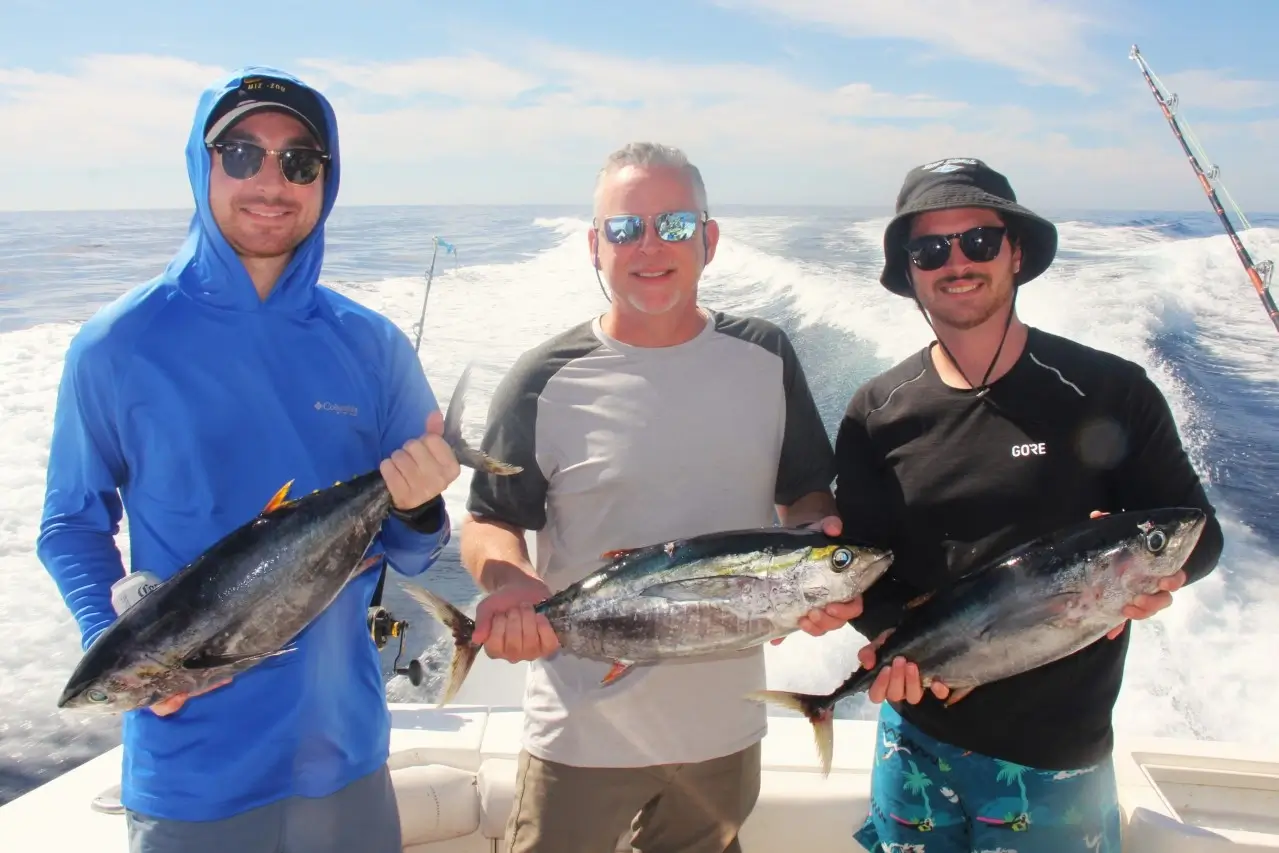
Yellowfin tuna occupy a special place within the Cabo fishing community because they offer something that very few gamefish can provide simultaneously. They possess extraordinary power, exceptional table quality, widespread global recognition, and the ability to grow from relatively modest twenty-pound fish into giants weighing hundreds of pounds. For many offshore anglers, landing a quality yellowfin tuna ranks alongside catching a marlin because the fight is often longer, more physically demanding, and capable of testing both equipment and endurance. That reputation explains why visitors planning a fishing vacation frequently ask What Months Are Best for Tuna Fishing in Cabo?
Unlike species that remain relatively consistent throughout the year, yellowfin tuna activity tends to strengthen and weaken according to changing ocean conditions. Water temperature, bait availability, current movement, and seasonal migration patterns all influence where tuna travel and how aggressively they feed. Understanding these seasonal relationships can dramatically improve an angler’s chances of success because timing often determines whether a trip encounters scattered fish or large concentrations of actively feeding yellowfin.
The waters surrounding Cabo San Lucas provide one of the most productive tuna environments in the Eastern Pacific because the southern tip of Baja California sits directly along major migration corridors used by pelagic species. Warm currents moving through the region create ideal conditions for baitfish, and wherever large populations of bait become concentrated, yellowfin tuna are rarely far away. This relationship between predator and prey forms the foundation for understanding What Months Are Best for Tuna Fishing in Cabo? because the strongest tuna seasons almost always coincide with periods when bait becomes abundant throughout offshore waters.
Experienced captains often spend as much time studying bait activity as they do studying tuna themselves because yellowfin are constantly searching for opportunities to feed efficiently. Flying fish, sardines, mackerel, skipjack tuna, and other forage species become magnets for larger predators, creating offshore feeding zones that may remain productive for extended periods. When these conditions develop around famous Cabo locations such as the Gordo Banks, the 1150, and productive offshore temperature breaks, tuna fishing can become exceptional.
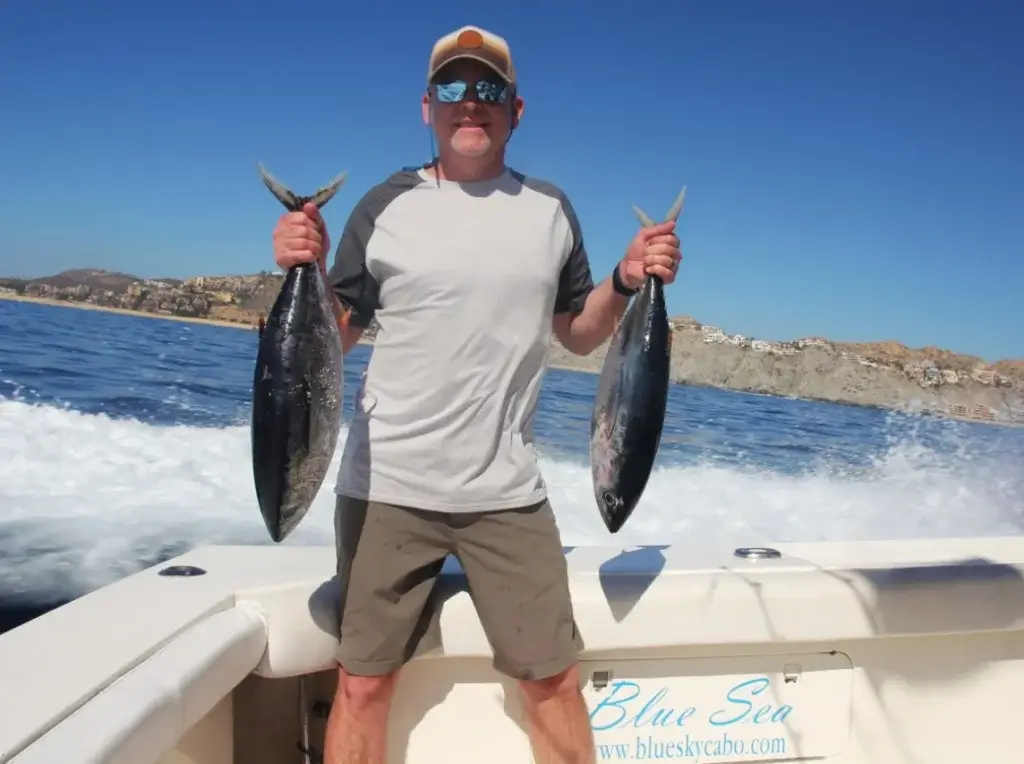
One reason Cabo has earned such a strong reputation among tuna anglers is the sheer variety of fish available. On some trips, anglers encounter smaller football tuna weighing twenty to thirty pounds that provide exciting action and outstanding eating quality. During stronger periods, however, the possibility exists for dramatically larger fish capable of producing battles measured in hours rather than minutes. This range of opportunity keeps tuna fishing exciting because every strike carries the potential for something much larger than expected.
Why Summer Begins the Best Months for Tuna Fishing in Cabo
When discussing What Months Are Best for Tuna Fishing in Cabo?, summer represents the period where conditions often begin shifting noticeably in favor of yellowfin activity. As water temperatures rise and bait populations expand throughout offshore waters, tuna become increasingly active across many of Cabo’s most productive fishing zones.
The arrival of warmer water influences the entire food chain. Bait becomes more abundant, flying fish become increasingly common, and larger predators respond accordingly. Yellowfin tuna take advantage of these opportunities because they are designed to cover large distances efficiently while searching for concentrated food sources. Whenever favorable conditions develop, schools of tuna may remain in productive areas for extended periods, creating opportunities that attract anglers from around the world.
Summer also establishes the foundation for the stronger tuna months that follow later in the year. While outstanding catches can occur during many different periods, experienced captains often view summer as the beginning of the annual progression toward Cabo’s most productive yellowfin season. Understanding that progression helps explain why serious tuna enthusiasts pay such close attention to changing conditions during this time of year.
How Water Temperature Helps Determine the Best Tuna Fishing Months in Cabo
Few variables influence yellowfin tuna more consistently than water temperature. Because tuna are highly migratory predators, they constantly adjust their movements according to environmental conditions that affect feeding opportunities and overall productivity within the fishery.
Understanding What Months Are Best for Tuna Fishing in Cabo? therefore requires looking beyond the calendar itself and examining the ocean conditions that define each season. Productive temperature ranges encourage baitfish activity, which in turn attracts predators. When favorable water becomes established across areas such as the Gordo Banks or offshore current breaks, yellowfin often respond quickly because those locations begin offering the combination of food and comfort they seek.
Captains monitor these changes carefully because even modest shifts can influence where fish concentrate. A productive area one week may become less active the next if temperatures change significantly, while previously quiet water may suddenly become productive when favorable conditions arrive. This constant evolution is one reason successful tuna fishing requires adaptability rather than relying exclusively on historical patterns.
The captains who consistently locate tuna are rarely guessing. They are interpreting a combination of water temperature data, bait observations, bird activity, and current movement to identify the areas most likely to support active fish on any given day.
Why August Through November Are Often Considered the Best Months for Tuna Fishing in Cabo
Although yellowfin tuna can appear during multiple periods throughout the year, many experienced captains become particularly excited when late summer transitions into fall because this period consistently produces some of the strongest opportunities available anywhere in Baja California Sur. When anglers ask What Months Are Best for Tuna Fishing in Cabo?, the answer most frequently points toward August, September, October, and November because these months often combine warm water, abundant bait, favorable currents, and highly active tuna populations.
The reason this period becomes so productive is closely tied to the food chain. Flying fish become increasingly abundant, bait schools often grow larger, and offshore ecosystems reach a level of productivity that supports substantial predator activity. Yellowfin tuna take full advantage of these conditions because they are designed to travel efficiently between feeding opportunities while expending relatively little energy.
During strong fall seasons, captains frequently locate tuna by following signs of feeding activity that may include bird schools, porpoise pods, bait concentrations, and surface disturbances occurring miles offshore. These indicators often point toward productive areas where yellowfin are actively hunting. The excitement generated by finding these conditions is one reason tuna fishing remains so addictive because every offshore run carries the possibility of discovering a school capable of producing extraordinary action.
Visitors are often surprised by the pace of these encounters because tuna fishing can change from quiet anticipation to complete chaos within seconds once a productive school is located. Multiple hookups, screaming reels, and fish moving in different directions create the type of excitement that keeps anglers talking about a trip long after they return home.
How Flying Fish Influence What Months Are Best for Tuna Fishing in Cabo?
One of the most important yet often overlooked pieces of the tuna puzzle involves flying fish. These remarkable baitfish play a major role in helping captains understand What Months Are Best for Tuna Fishing in Cabo? because yellowfin frequently feed aggressively whenever flying fish populations become abundant throughout offshore waters.
Experienced crews pay extremely close attention to flying fish activity because it often provides valuable clues regarding where tuna may be feeding. Warm water periods frequently support increased flying fish populations, which helps explain why late summer and fall consistently produce strong yellowfin opportunities.
The relationship between tuna and flying fish becomes especially important during larger fish seasons. Trophy-class yellowfin often target substantial bait sources because doing so allows them to maximize feeding efficiency. Whenever flying fish become concentrated around offshore structure, current lines, or productive temperature breaks, captains know they are operating in areas capable of producing exceptional tuna action.
This connection between bait and predators illustrates why successful tuna fishing requires much more than simply selecting a destination. Understanding the biological relationships that drive the fishery often determines whether anglers encounter scattered fish or truly memorable opportunities.
Why Kite Fishing Has Become So Effective for Yellowfin Tuna in Cabo
When discussing What Months Are Best for Tuna Fishing in Cabo?, it is impossible to ignore the growing popularity of kite fishing because the technique has transformed how many captains pursue larger yellowfin.
Traditional trolling remains effective, but kite fishing offers unique advantages during periods when tuna are feeding aggressively on surface-oriented bait such as flying fish. By presenting baits in a way that closely imitates natural prey, captains can create opportunities that are remarkably difficult for large yellowfin to ignore.
The technique becomes particularly valuable during peak tuna months because those periods often coincide with conditions where surface feeding activity is more common. Large tuna pushing bait toward the surface create visual excitement that many anglers describe as one of the most thrilling experiences in all of offshore fishing.
Watching a giant yellowfin explode on a surface bait creates a level of anticipation and excitement that is difficult to replicate with many other fishing methods. This visual component has helped make kite fishing increasingly popular among serious tuna enthusiasts visiting Cabo.
What Months Are Best for Tuna Fishing in Cabo if You Want Bigger Fish?
Not all tuna anglers share the same objectives. Some visitors are perfectly happy catching football-sized yellowfin because they fight hard, provide excellent table fare, and create nonstop action. Others arrive with dreams of battling the largest tuna available.
Understanding What Months Are Best for Tuna Fishing in Cabo? therefore depends partly on individual goals because periods that produce the greatest numbers of fish are not always identical to periods associated with the largest specimens.
Late summer through fall generally offers the strongest combination of numbers and size. During this period, anglers maintain realistic opportunities to encounter both smaller and larger fish while benefiting from the productive conditions that characterize the season.
The possibility of connecting with a genuinely large yellowfin is one reason so many anglers schedule trips during these months. While giant tuna are never guaranteed, the odds tend to improve when favorable water conditions, abundant bait, and seasonal migrations overlap within the same timeframe.
That combination has helped establish Cabo as one of the premier yellowfin destinations in the world.
Why the Gordo Banks and the 1150 Become So Important During Peak Tuna Months
Few areas receive more attention during tuna season than the Gordo Banks and the 1150 because both locations possess characteristics that consistently attract pelagic species. Whenever anglers begin researching What Months Are Best for Tuna Fishing in Cabo?, these names inevitably enter the conversation because they have produced quality tuna for generations.
The underwater structure associated with these areas helps create conditions that concentrate bait and attract predators. When favorable temperatures combine with strong bait activity, yellowfin often use these locations as feeding grounds while moving through the broader region.
Experienced captains understand that productive structure alone does not guarantee success. Water conditions must cooperate as well. When both ingredients align, however, these locations can produce the type of fishing that attracts international attention.
Many of Cabo’s most memorable tuna catches have originated from these productive offshore zones, which explains why they remain such important components of the local fishery.
How CabosanLucasFishing.com Helps Anglers Plan Tuna Fishing Trips
Because seasonal timing plays such a significant role in yellowfin success, many anglers benefit from current fishing information before selecting travel dates.
Cabo San Lucas Fishing regularly follows:
- Tuna activity
- Water temperatures
- Flying fish activity
- Seasonal fishing trends
- Offshore reports
- Gordo Banks activity
- 1150 fishing conditions
These updates help anglers understand how the fishery is evolving while providing valuable insight regarding the strongest opportunities available during different periods of the year.
The Real Answer to What Months Are Best for Tuna Fishing in Cabo?
After examining seasonal migrations, water temperatures, flying fish populations, offshore structure, kite fishing techniques, and historical fishing trends, the answer becomes remarkably clear. What Months Are Best for Tuna Fishing in Cabo? The strongest tuna fishing generally occurs from August through November because warm water, abundant bait, favorable offshore conditions, and active yellowfin populations combine to create exceptional opportunities for both quantity and quality. While tuna can certainly be caught during other times of the year, this late-summer and fall period consistently provides the most reliable combination of action, size potential, and overall fishing success.
Visitors targeting yellowfin during these months gain access to one of the world’s great tuna fisheries, where football-sized fish, larger trophy specimens, and unforgettable offshore experiences all remain realistic possibilities. Whether the goal involves filling a cooler with premium tuna, battling a powerful fish capable of testing endurance, or simply experiencing the excitement of Cabo’s legendary offshore fishery, understanding What Months Are Best for Tuna Fishing in Cabo? allows anglers to maximize their chances of success by aligning their trip with the most productive period of the year.